
Playwrights, journalists, and translators: Meet the JCB Prize for Literature jury for 2023.
 Aanchal Singh
Author
Aanchal Singh
Author
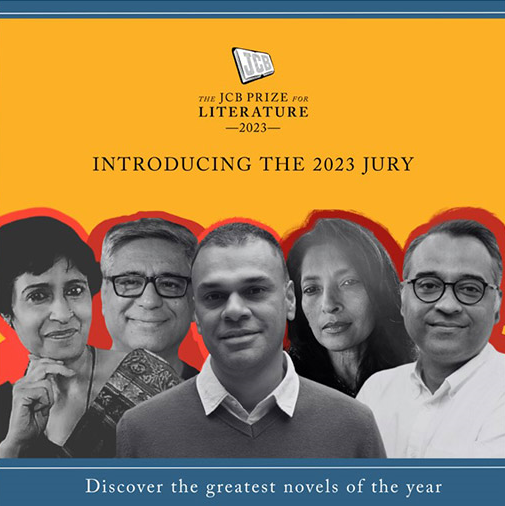
There will be three announcements: the 10-book longlist in September, the 5-book shortlist in October, and the winner in November.
The jury for the sixth edition of the JCB Prize for Literature, one of India's most coveted fiction prizes, has been revealed. It will consist of Srinath Perur, chair, author and translator, Mahesh Dattani, playwright and stage director, Somak Ghoshal, critic and learning designer, Kavery Nambisan, author and surgeon, and Swati Thiyagarajan, conservation journalist and filmmaker. In September, the longlist of 10 books, in October, the shortlist of 5, and in November, the winner will be revealed. Each shortlisted author will receive Rs 100,000 (and the translator Rs 50,000, if applicable), while the winner author will receive Rs 25 lakh (and the translator Rs 10 lakh, if applicable).
Mita Kapur, Literary Director of the JCB Prize for Literature, said, “Last year… was the first time our jury put forth a shortlist that were all translations. India speaks and reads in so many languages, and the books that are submitted for the JCB Prize are a true representation of the many Indias that reside within one. The 2023 jury brings together immense experience from a diverse range of backgrounds, languages, artforms and mediums of expression.”
Perur said, “[This jury] represents an opportunity to celebrate books that speak to our times, and bring to notice books that may have been unfairly overlooked. I particularly appreciate the Prize’s efforts at encouraging publishers to send in translations. It ensures that the field truly represents the range of Indian novels brought out in English over the past year.”
Last year's winner, Khalid Jawed's Paradise of Food (Rs 799, Juggernaut Books), translated by Baran Farooqi, was an unorthodox examination of the power and family dynamics that congregate in a kitchen, upending its conventional depiction as a site of love and bonding in favour of the violence, disgust and rot that hangs like a miasma over vegetables that can go bad, meat that was once living, and cooking tools that can double as murder weapons.
Previous winners include Jasmine Days by Benyamin, which Shahnaz Habib translated from the Malayalam in 2018; The Far Field by Madhuri Vijay in 2019; Moustache by S. Hareesh in 2020; and Delhi: A Soliloquy by M.Mukundan in 2021, which Fathima E.V. and Nandakumar K. translated from the Malayalam.






Comments (0)