

India Responds to LPG Supply Concerns Amid West Asia Crisis
 Kajal Saxena
Author
Kajal Saxena
Author
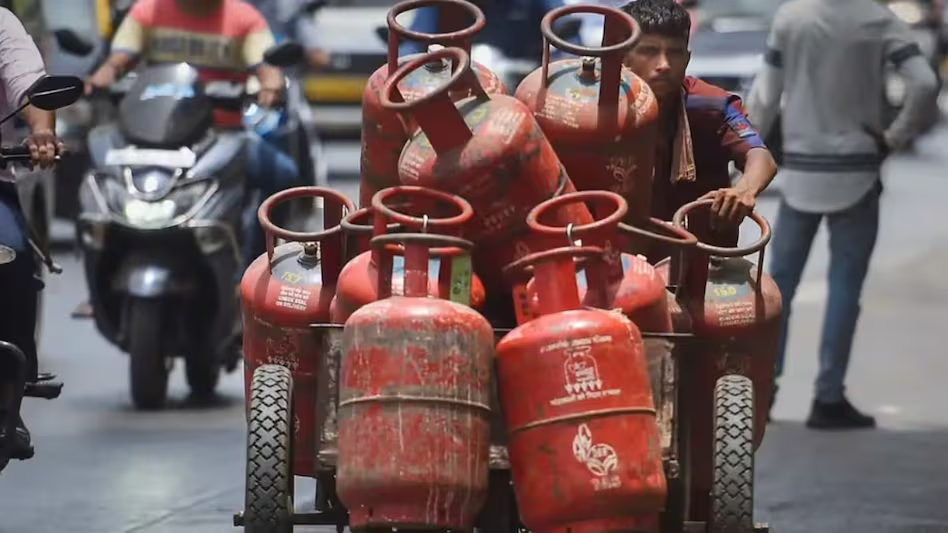
India is taking multiple steps to stabilise the supply of Liquefied Petroleum Gas (LPG) as disruptions in global energy routes caused by the ongoing conflict in West Asia raise concerns about availability and pricing. The Union government has moved to strengthen supply chains, increase domestic production, and counter misinformation while urging the public not to panic.
Centre Directs States to Secure LPG Supply Chain
The Union government has asked all States and Union Territories to ensure the safety and uninterrupted functioning of the LPG supply network. Union Home Secretary Govind Mohan instructed state chief secretaries and Directors General of Police to provide security for LPG infrastructure, transport routes, and delivery personnel.
States have also been asked to monitor and counter rumours about LPG shortages circulating on social media. Officials warned that misinformation could trigger panic buying and disrupt the distribution system. The Ministry of Home Affairs has set up a 24-hour control room with officers from the Ministries of Petroleum and Natural Gas and Information and Broadcasting to coordinate monitoring and response.
Domestic Production Increased to Stabilise Supply
To ease pressure on the market, the government issued an order on March 8 directing refineries and petrochemical plants to maximise LPG production and prioritise supply for domestic consumers. Following this directive, officials from the Ministry of Petroleum and Natural Gas said India’s LPG production has increased by around 25%.
According to Sujata Sharma, Joint Secretary in the ministry, oil companies have been asked to maintain normal delivery cycles and ensure that household consumers receive priority in distribution. Authorities emphasised that consumers should avoid unnecessary booking of cylinders or stockpiling.
Diversifying Oil Import Routes
The government has also been working to reduce the country’s dependence on vulnerable maritime routes in the Gulf region. Earlier, a large portion of India’s crude imports passed through the Strait of Hormuz, a key global energy corridor affected by the current conflict.
Officials said India has diversified its sources of crude procurement, and around 70% of imports are now arriving through routes outside the Strait of Hormuz, compared with about 55% earlier. The change is aimed at reducing risks associated with disruptions in shipping through the Gulf.
However, India still relies heavily on imports to meet domestic demand for LPG, with about 60% of the country’s requirements coming from overseas sources.
Impact on Businesses and Public Services
Despite government efforts to stabilise supply, reports from several states indicate that the commercial sector is experiencing shortages. Restaurants, hotels, and catering businesses in some cities have reported difficulty obtaining commercial LPG cylinders, forcing them to scale down operations or adjust menus.
Industrial units that depend on LPG for heating, sterilisation, and manufacturing processes have also reported rising costs and limited availability. In some areas, public facilities such as crematoria have raised concerns about securing adequate supplies in the coming days.
Consumers Turn to Alternative Cooking Options
Concerns over cooking gas availability have led many households to consider alternative cooking methods. Retailers and online platforms have reported increased demand for induction cooktops and other electric cooking appliances as families look for backup options.
While prices of these appliances have risen in some markets, supply remains available in most cities.
Government Urges Public Not to Panic
Addressing public concerns, Prime Minister Narendra Modi said the global energy supply chain has been affected by the conflict in West Asia but assured citizens that the government is taking necessary steps to manage the situation.
He urged people not to spread or believe rumours about fuel shortages and emphasised that maintaining calm and relying on verified information would help ensure smooth distribution during the crisis.
Managing a Global Energy Challenge
The situation highlights India’s continued dependence on global energy markets and the vulnerability of supply chains to geopolitical conflicts. While increased domestic production and diversified import routes are helping to cushion the immediate impact, authorities remain cautious as the international situation continues to evolve.
For now, the government’s focus remains on maintaining steady supplies for households, preventing hoarding, and ensuring that essential services receive priority access to LPG during the ongoing crisis.










Comments (0)