

Introducing The poet John Keats

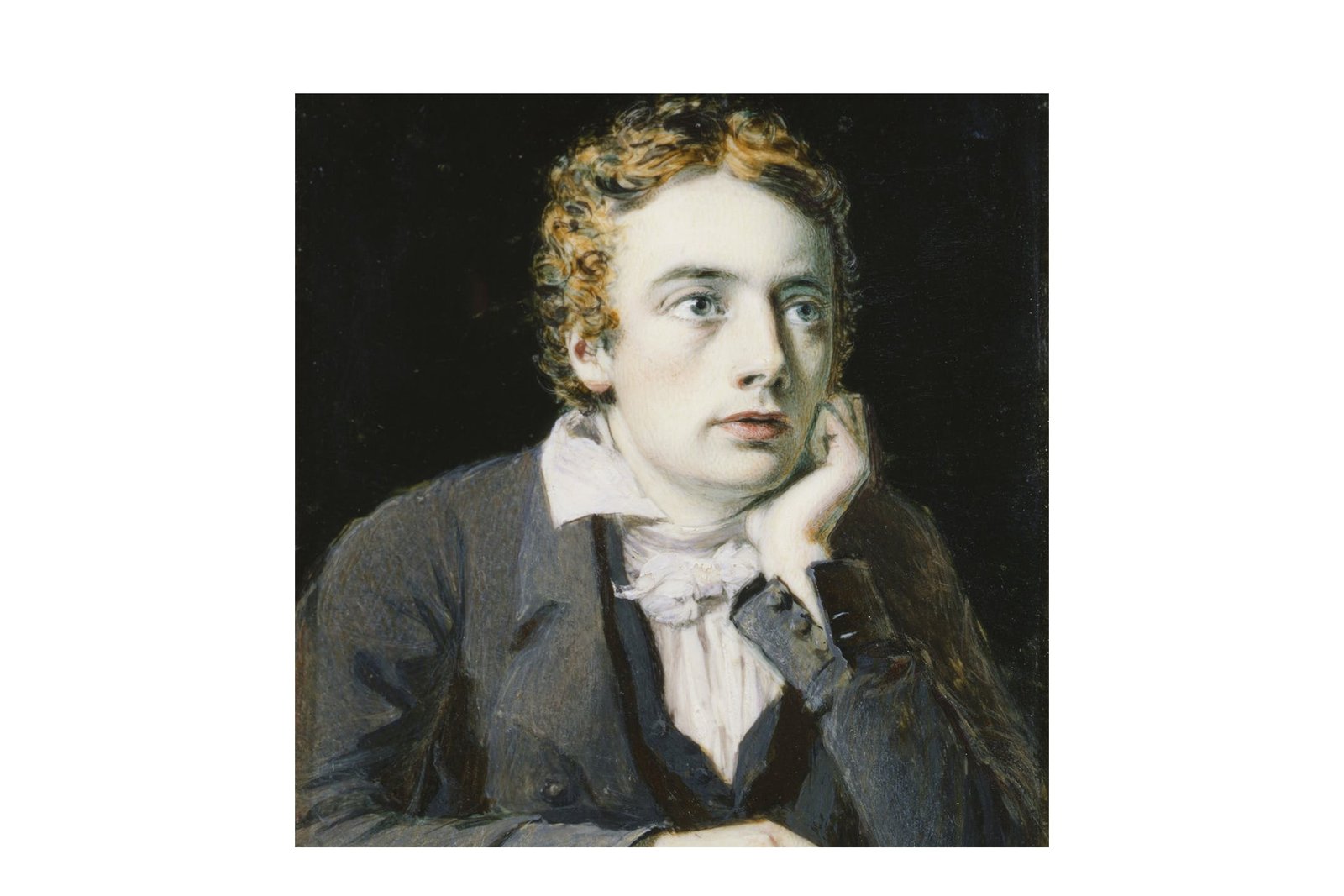
John Keats was born in 1795, in the city of London. The eldest of five children - four brothers and one sister - was born to a stable keeper, who died when his childhood was not crossed and he was nine years old. He possessed impassioned love for his mother and caressed her during the period of her illness in the year 1810, who died in the same year.
The children were sent to Mr. Abbey who immediately took Keats under his apprenticeship for four years to a surgeon. Although, he could not keep himself away from the attraction of poetry during the entire period of his practice. Till the year 1817, he passed the exam and gave up the profession for devoting himself to poetry. He received huge encouragement from his brothers and friends. It was his friend Cowden Clark who, fortunately, introduced him to the poets such as Haydon, Hazlitt Leigh Hunt, Shelly, and Godwin, and from whom the poet often borrowed books including Spencer's Fairy Queen, who's everlasting influence is vividly seen in the poetry of Keats. In 1811 he published his first book of poetry which attracted a less number of readers and was not regarded as a great success. He busied himself searching for places to be spent writing and studying Spenser, Shakespeare, Milton, Wordsworth etcetera, with an undisturbed calm. His mother and brother had died due to consumption and by this time the signs of it had been seen in him. Endymion was composed during this period. Which appeared in 1818, and it was brutally criticized by the Quarterly Review and Black Wood's magazine. Besides his sickness, things became even more worse and got intensely aggravated by the state of despondency for the rejection in his violently impassioned love for Fanny Browne with whom he had frivolously fallen in love at first sight. Nonetheless, he kept up his passionate writing and produced his best work ,"Lamia, Isabella and other Poems(1820)".
He left for Italy in September 1820, on the grounds of the instructions of his doctors to a warmer climate, accompanied by his friend Severn who took tender care of the poet. On one brutal day in February 1820, at the age of twenty-five, Keats breathed his last in the arms of his loving friend. He was buried in a Protestant cemetery in Rome with the epitaph written by the poet himself on his tomb.
"Here lies one whose name was writ in water".
Such is the heart squeezing anecdote of the poet who is among the most celebrated poets of England and who is believed to have equaled Shakespeare if he had lived long enough.
Ode to Melancholy
Background: The Ode was written in May 1819, when Keats had been reading for some time Burton's "Anatomy of Melancholy" and he was in a particularly rejected mood.
"Though build a bark. Dreameth in any isle of Lethe dull"
Opened, as first written, with the above lines as the first stanza which was later found out of harmony and was omitted. It was retained from the second stanza which is now the first.
The substance of the Ode
The Ode shows the bitter experiences of the personal life of the poet who passed his life, since childhood, in a true melancholic mood.
The poet, in this Ode, believes true melancholy is never to be accumulated in things where it is supposed to be found. He says melancholy is not found in the nightshades or underworld or yew berries or in the omens of death and destruction, etc. He advocates the theory of melancholy which is to be found in Beauty which is the eternal source of melancholy. Man can feed fat to his sadness by falling in the deep love for Beauty. He can, to the fullest, cherish melancholy when he uses his capacities of joy to the fullest. Man would not ache severely if he does not fall in love with Beauty utterly.
"She duels with Beauty - Beauty that must die"
Thus, the Ode is an expression of the poet's genius and, of course, his melancholic sufferings. He learned from life that joys and sorrows are habitually interrelated with each other. Therefore, he says
"pain in joy and joy in pain".
There must be intense moments of happiness which correspond to melancholy equally intense. The poet advocates this theory as he suffered from the deep pain and anguish, the love brought to him.
To conclude
The paradoxical thought, Keats represents, that the most intense the pleasure, the most intense the melancholy.

Article by Naheed Akthar
Naheed Akthar, an Indian poet, holds a master's degree in English literature. She is a lecturer, poet, and writer. She seems in love with Classical and Romantic poetry, however, a sense of originality is vividly seen in her way of writing. Her poems have been published in various anthologies. And have also been published in her own book of poetry, " Phantasms of My Heart"










Comments (0)