

Exclusive Interview with Priyadharshini Bhoopathy: The Story Behind Heal Understand Grow and the Journey Towards Emotional Healing

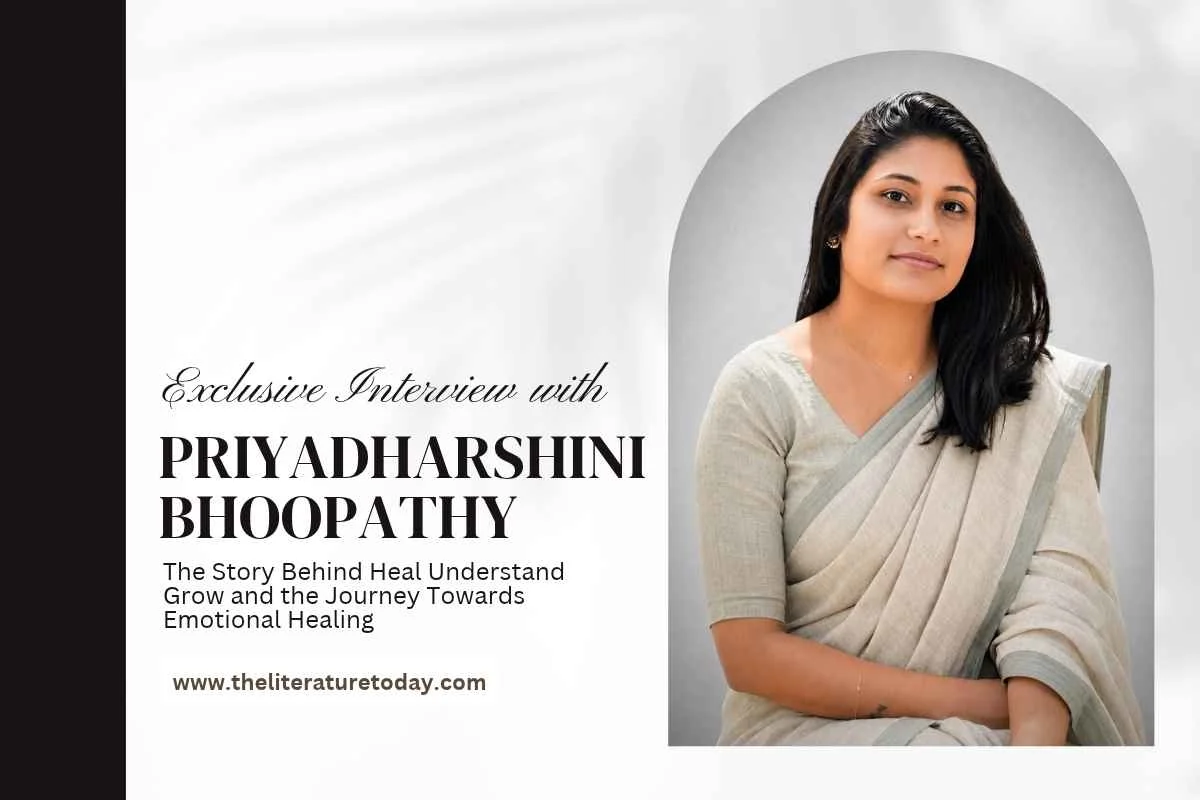
Priyadharshini Bhoopathy is a published author, an IT professional, and the creator of PAUSE, a literary and reflective platform dedicated to self-awareness, human experiences, emotions, and the questions that shape our choices. She holds an M.Phil. in Computer Science and has professional experience in technology and project management. Her writing journey stems from a desire to transform observations and life experiences into meaningful conversations that encourage readers to pause, reflect, question their assumptions, and reconnect with themselves. Her debut book, HUG, is the first instalment in the PAUSE book series, exploring the emotions people often find difficult to express and encouraging them to understand their feelings and rediscover themselves. Her upcoming book, WANTING, continues this reflective journey by examining human desires, the reasons behind them, and the importance of questioning what we truly want. Through PAUSE, guided by the philosophy “Read. Reflect. Begin.”, she envisions creating a space that extends beyond books to foster reflection, meaningful conversations, and shared human experiences. In recognition of her literary contributions, she has qualified for the Excellence in Literature category at the South India Women Achievers Awards (SIWAA) 2026. Her academic background also includes research experience and publications undertaken during her M.Phil. journey. Through her writing, Priyadharshini encourages readers to embrace different perspectives, question assumptions, and protect the peace that matters most to them. Learn more about her work and literary vision at www.pausebypriya.com.
The Literature Today: You are an IT professional by career and a writer by passion. How did your professional journey in technology influence your perspective on people, emotions and personal growth and what ultimately drew you toward writing about these subjects?
Priyadharshini Bhoopathy: Working in IT has helped me understand people better. I have worked with different people, different personalities and different ways of thinking. It taught me to listen, observe and understand that everyone sees the same situation differently. Over time, I became more interested in understanding people, their emotions and why they think or react in certain ways. That interest gradually found its way into my writing. I started writing about the questions we usually don't ask ourselves and the things we often ignore. IT became my career, but understanding people became one of the reasons I started writing.
The Literature Today: You have mentioned that ordinary moments, honest conversations, and the stories people quietly carry inspire your writing. Was there a particular moment or experience that planted the seed for Heal Understand Grow?
Priyadharshini Bhoopathy: Yes, there was a particular moment. One day, I was feeling completely lost. I went to Cubbon Park in Bangalore and sat under a tree. I was crying uncontrollably, with no one beside me. A woman was sitting nearby. I didn't know her. She suddenly came to me and said, “I don't want to introduce myself, and you don't have to tell me your name either. Just tell me whatever is bothering you. I don't have to give you advice. I can simply sit here and listen.” That moment felt like a HUG from a complete stranger. What she gave me in just a few minutes, I wanted to give my readers through my book. I wanted them to feel that they are not alone, that someone is listening to them, and that someone is there for them, even when they feel like they have no one. She made me believe in people again. She also made me realise that a woman can be another woman's strength. That feeling of hope and being heard became one of the reasons behind HUG.
The Literature Today: The title itself presents three powerful stages: Heal, Understand, Grow! Why did you choose these three words and how do you see them connecting with one another in a person’s journey of transformation?
Priyadharshini Bhoopathy: I chose these three words because I do not think healing is something we can simply decide to do. We cannot simply say, “I want to heal” or “I want to move on” and expect it to happen. To heal, first we need to understand what we are healing from. That is where “Understand” comes in. When we start understanding what happened, what we felt, and why we feel the way we do, we may slowly start accepting it. Once there is acceptance, we can start focusing on ourselves and our growth. So for me, Heal, Understand and Grow are connected. Understanding helps us move towards acceptance, and acceptance creates space for growth. That is why I chose HUG.
The Literature Today: Your book does not appear to promise quick fixes or ready-made solutions. Why was it important for you to take a reflective approach to personal development rather than offering a conventional list of answers?
Priyadharshini Bhoopathy: I don't believe quick fixes or ready-made solutions are always the real solution. When something happens, we usually have people around us who give us advice and suggestions. Their words may motivate us, and we may follow what they suggest. Sometimes it works, and sometimes it does not. But when something remains unresolved and becomes bigger, we may again look for the same person or the same group for comfort because our mind remembers that comfort we received earlier. And when they are not there, that itself can create more stress for us. I wanted people to become emotionally independent. If someone is there beside you, that is an added advantage. They can give you moral support, but they cannot be your actual solution. You need to go through the emotion, understand it, feel it, and come out of it yourself. That is what makes you stronger the next time you face something similar. For me, HUG is not about giving people solutions. It is about helping them understand themselves enough to find their own way through what they are going through.
The Literature Today: Emotional healing is one of the central themes of the book. What do you believe prevents people from truly acknowledging their emotional wounds and what is the first step toward beginning that healing process?
Priyadharshini Bhoopathy: Accountability is one of the biggest things that prevents us from acknowledging our emotional wounds. Most of the time, when something goes wrong between two people, we believe the mistake is with the other person. But in many situations, both people may be right in their own way, both may be wrong in some way, or there may be a third perspective that we are not seeing. We get caught in our emotions and sometimes in things from our past that have already affected us. Those things can trigger us, and we react without understanding why we reacted that way. I feel the first step towards healing is to look at yourself and take accountability. Ask yourself: Why did I react this way? What triggered me? Where did this actually start? What happened before the argument or the problem? When you understand the root of what is happening, you can start understanding yourself. And I think that understanding is where healing begins.
The Literature Today: Interestingly, Heal Understand Grow encourages readers to develop greater self-awareness and understand their emotions. Why do you think so many of us find it difficult to name, accept, or sit with what we are actually feeling?
Priyadharshini Bhoopathy: We often struggle because we do not get to the roots of our emotions. We don't take the emotion seriously when it actually happens. We take it seriously only when the reaction happens. When the reaction happens, we sit with the reaction and the consequences of what happened, but we don't always go back and look at the actual incident that started everything. Personally, I feel we need to dig deeper into ourselves. We need to ask ourselves more questions and understand why we are doing something. Why am I doing this? What made me do this? What is the outcome of what I am doing? What am I expecting from this? When we start asking these questions and become more self-aware, we slowly start understanding our emotions instead of just reacting to them. For me, self-awareness starts when we stop looking only at the reaction and start looking at the root.
The Literature Today: Mindfulness and self-acceptance feature prominently in the book. How can the readers incorporate these ideas into ordinary, busy lives without turning them into another set of obligations or expectations?
Priyadharshini Bhoopathy: I do not think mindfulness or self-acceptance should become another obligation or expectation; I believe they are necessities. I encourage people to allow their emotions to flow freely. You should not suppress your emotions or try to control what you feel. If you are angry, sad, hurt or frustrated, feel it. There is nothing wrong with having that emotion. However, feeling an emotion and acting on it are two different things. Whatever comes to your mind, you don't necessarily have to do it, especially if your reaction could harm another person. So when you react or vent, take a pause afterwards. Ask yourself: Why did I react this way? When there were so many ways I could have reacted, why did I choose this one? What caused this emotion? Understand the emotion. Learn from it. Then decide your next step. I feel this can be done in our everyday life without making it another task or obligation. When we start understanding our emotions, it helps us not only personally but professionally too. Personal growth always reflects in our professional growth. For me, mindfulness is not controlling your emotions. It is allowing yourself to feel them, understanding them, and then choosing how you want to respond.
The Literature Today: Your writing aims to create a space where readers can pause, reflect and reconnect with themselves. What role does silence play in that process, especially since you personally find meaning in silence and everyday moments?
Priyadharshini Bhoopathy: Silence is one of the most powerful ways to understand yourself. When you are surrounded by people or you are in a crowded place, your mind is usually occupied with one particular thing. But when you are in silence, multiple thoughts start coming to you. You start noticing what kind of thoughts come into your mind and what kind of emotions come with them. You can start categorising them and understand what your mind is actually prioritising. What kind of emotion is it prioritising? What kind of thought is it prioritising? Once you understand that, you can channelise yourself accordingly. I feel silence creates chaos in our minds before it creates clarity. When we allow ourselves to sit with that chaos, we start understanding our thoughts and emotions. For me, silence doesn't necessarily give you an immediate answer. It gives you the space to understand yourself, and that understanding eventually gives you clarity.
The Literature Today: The book also explores developing a healthier relationship with ourselves and others. How does the way we understand ourselves influence the way we communicate, connect and respond to the people around us?
Priyadharshini Bhoopathy: When we learn about our emotions and understand ourselves, we start taking accountability for our actions. We don't make someone else accountable for what we do. Whether the consequence is good or bad, it lies with us. We are responsible for our actions and for the consequences that come from those actions. This also helps us understand when our actions have hurt or caused pain to someone else. Instead of putting the blame on others or avoiding responsibility, we start taking responsibility for what we have done. I feel that is when we become more emotionally intelligent and emotionally responsible. Understanding ourselves doesn't just help us personally. It also changes the way we communicate, respond to people and take responsibility for the impact we have on them. We begin to understand and value the fact that we are accountable for the consequences of our actions.
The Literature Today: As someone who enjoys listening to people’s stories and observing their experiences, how have the stories of others shaped your understanding of healing, self-acceptance and personal transformation while writing this book?
Priyadharshini Bhoopathy: When I hear other people's stories and learn about their experiences, I realise that there can be so many different perspectives to the same incident. If something happens to us, in most cases, we are not the first person to face it, and we will not be the last person to face it. Someone may have already gone through something similar, and someone else may face it in the future. What differs is how each person handles it and how they understand it. I started learning to look at things from different perspectives by listening to other people's stories. And that changed the way I looked at some of my own experiences too. There were situations in my life where I had come to a certain conclusion. But after hearing different perspectives, I started looking at the same situation differently. That gave me a clarity that I was missing for a long time. So for me, other people's stories don't give us a solution to our own problems. They give us another perspective to look at our own situation. And sometimes, that perspective is enough to bring clarity.
The Literature Today: If a reader reaches the final page of Heal Understand Grow during a particularly difficult phase of life, what is the one thought, question, or shift in perspective you would hope they carry forward with them?
Priyadharshini Bhoopathy: You are not alone. But there is one thing I would really want the reader to understand: don't neglect what you are feeling. Do not skip over it. Do not immediately rush to find a solution. Don't be afraid of an emotion. Don't be afraid to face the hurt, the pain or the loss. We should not do things that create a temporary escape from facing the emotion, the hurt, the pain or the loss. Face the loss. Face the hurt. Face the pain. Go through it. Learn it. Understand it. And gradually get out of it. When you do that, the next time something happens, it may not hurt you in the same way. You start developing more acceptance and a better understanding of yourself and what you go through. You don't have to escape your emotions. Go through them, understand them, and come out of them. And remember, you're not alone.







Comments (0)