

Book of the Week: Belonging – Sonia Gandhi's Extraordinary Journey of Love, Loss, Identity and India
 Mariyam Yasser
Author
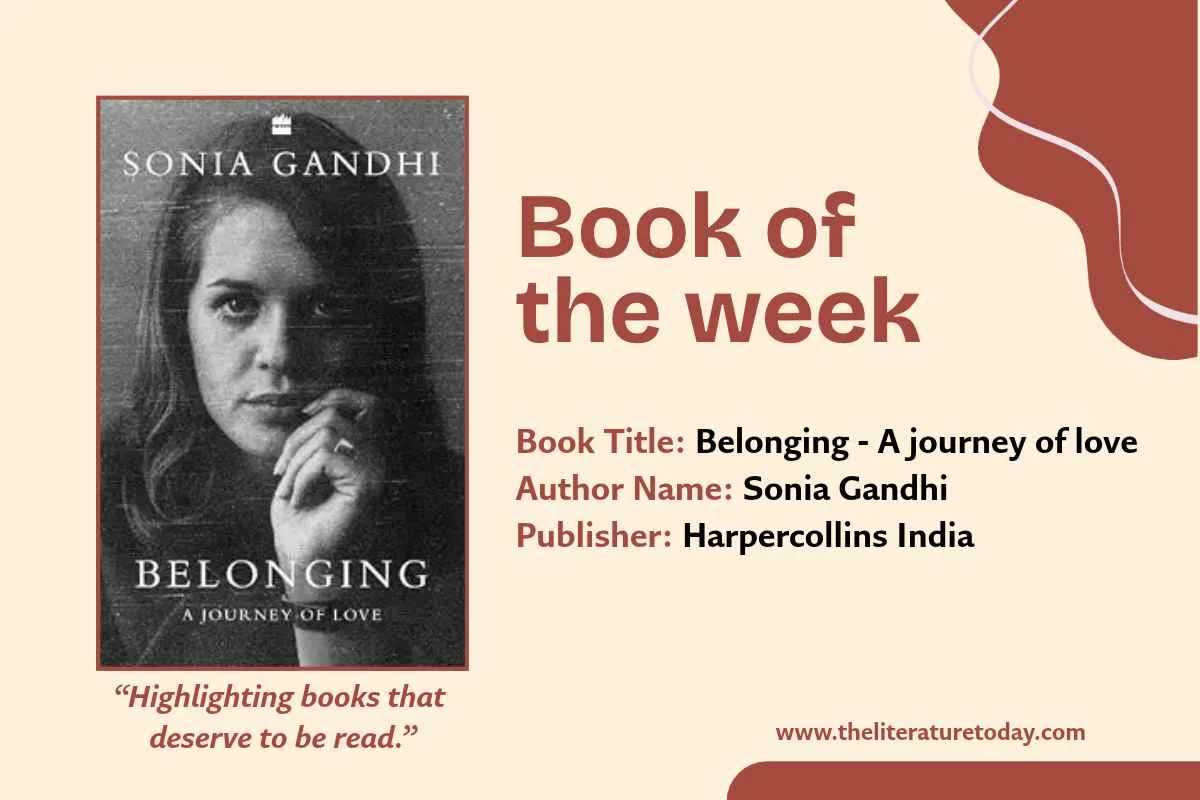
From a small village in Italy to the heart of Indian politics, Sonia Gandhi's memoir Belonging offers an intimate account of a life shaped by love, family, personal tragedy and an extraordinary connection with India.
Some life stories are remarkable not because they follow a planned path, but because they unfold through unexpected encounters, difficult choices and extraordinary circumstances. Belonging by Sonia Gandhi is one such story. A deeply personal memoir, the book takes readers through the life of a young Italian woman who found love in England, built a family in India and eventually became one of the country's most recognised political figures.
Beginning with her childhood in post-war Italy, Belonging traces Sonia Gandhi's journey from a relatively quiet upbringing to a life closely connected with India's political history. Through personal memories and reflections, she explores the experiences that shaped her identity, her understanding of family and her eventual sense of belonging to a country far removed from her birthplace.
A Love Story That Changed the Course of a Life
The story begins in Cambridge, England, in 1965. Nineteen-year-old Sonia Maino is a student when she meets Rajiv Gandhi, a young man who would eventually become her husband and India's Prime Minister. Their meeting develops into a love story that changes the direction of both their lives.
Rajiv Gandhi was the grandson of Jawaharlal Nehru, independent India's first Prime Minister. Yet, for Sonia, the beginning of their relationship was not about political influence or public recognition. It was about love, companionship and the promise of building a life together.
Her marriage brings her to India, where she enters a family deeply connected with the country's political landscape. Adjusting to a new culture, language, traditions and way of life becomes an important part of her journey.
Finding a Home in an Unfamiliar Country
One of the most interesting aspects of Belonging is Sonia Gandhi's account of adapting to Indian life. Moving from Italy to India meant embracing a completely different cultural environment.
Her introduction to her formidable mother-in-law, Indira Gandhi, India's first woman Prime Minister and daughter of Jawaharlal Nehru, marks another significant chapter in her life.
Readers witness Sonia gradually becoming comfortable in her adopted home. She learns Hindi, embraces traditional Indian clothing, develops a taste for the country's spicy cuisine and becomes familiar with its customs and everyday experiences.
Meanwhile, Rajiv Gandhi pursues a career as a commercial airline pilot. Together, they raise their two children in New Delhi, living within the Prime Minister's residence.
These memories offer a glimpse into the personal world of a family whose private lives were closely connected with the public responsibilities of Indian politics.
Tragedies That Changed Everything
Behind the public image of the Gandhi family lies a deeply emotional story of loss and resilience.
The death of Rajiv Gandhi's younger brother, Sanjay Gandhi, in a plane crash becomes an early turning point. The tragedy is followed by an even more devastating event in 1984, when Indira Gandhi is assassinated by her security guards in the garden of her residence.
Following his mother's death, Rajiv Gandhi steps into the role of Prime Minister, despite Sonia's fears and concerns about the responsibilities and dangers associated with public life.
However, tragedy strikes the family once again. Seven years later, in 1991, Rajiv Gandhi is assassinated by a suicide bomber while campaigning in Tamil Nadu.
Through her recollections, Sonia Gandhi revisits these painful moments with emotional honesty. Her account offers readers a personal perspective on events that profoundly affected not only her family but also the political history of India.
Also Read : Book spotlight of A walk into nature by Zia ur rahman
From Private Life to the Centre of Indian Politics
Following Rajiv Gandhi's assassination, Sonia initially keeps her distance from active politics. For years, she resists repeated pressure to enter public life, choosing instead to focus on her family and private responsibilities.
Eventually, she accepts the challenge and enters Indian politics, taking on a leadership role in the Indian National Congress.
Her journey is particularly significant because she had once been viewed by many as an outsider because of her foreign birth. Over time, however, she builds a strong political presence and earns the trust and affection of millions of supporters.
She goes on to become the longest-serving president of the Indian National Congress, navigating complicated political alliances, internal challenges and major national developments.
One of the most defining moments comes after a crucial election when the Congress Party selects her to become Prime Minister. In a decision that surprises many, Sonia Gandhi declines the country's highest political office.
Instead, she chooses to lead her party through an alliance that goes on to govern India for a decade.
This chapter offers an interesting perspective on leadership, responsibility and the personal choices that can shape a nation's political direction.
An Intimate Window into India's Changing History
Beyond its personal narrative, Belonging also provides readers with an insider's perspective on more than six decades of India's political, economic and social transformation.
Through the experiences of Sonia Gandhi, the memoir revisits important moments in post-Independence India, offering glimpses into the country's political developments, changing social realities and complicated public life.
What makes the narrative particularly engaging is the way it connects major historical events with personal experiences. Rather than presenting history only through political developments, the book explores how these events affected relationships, families and individual lives.
It is this combination of personal storytelling and historical reflection that gives the memoir its distinctive appeal.
Why Belonging Deserves a Place on Your Reading List
At its heart, Belonging is more than the story of a political figure. It is an account of a woman navigating love, cultural change, family responsibilities, devastating losses and the unexpected demands of public life.
The memoir explores meaningful themes of identity, duty, resilience and the search for home. Sonia Gandhi's reflections offer readers an opportunity to understand the person behind the public image and the experiences that shaped her remarkable journey.
Her story also raises an interesting question: Does belonging come from where we are born, or from the relationships, experiences and responsibilities that eventually define our lives?
With its blend of personal memories, family history and political experiences, the book offers something for readers interested in biographies, memoirs, Indian history and contemporary politics.
Must read : Small wins everyday by luke...
Final Thoughts
Belonging is a compelling account of an extraordinary life shaped by unexpected beginnings and life-changing circumstances. From a young Italian student falling in love in Cambridge to becoming an influential figure in Indian politics, Sonia Gandhi's journey is filled with moments of affection, courage, grief and transformation.
The memoir's greatest strength lies in its personal perspective. It brings readers closer to the human experiences behind some of India's most significant political events while exploring the deeper meaning of identity, home and belonging.
For readers who enjoy real-life stories that combine personal emotion with historical significance, Belonging makes a thoughtful and worthwhile addition to their reading list.
The Literature Today – Book of the Week
A story of love that crossed borders, a family that faced unimaginable loss and a woman who discovered that home is not always where life begins, but where the heart ultimately belongs.









Comments (0)