

Rahul Ajit Joshi’s Kaalnetra: The Trishul Chapter – An Intriguing Journey into Ancient Secrets
 Mariyam Yasser
Author
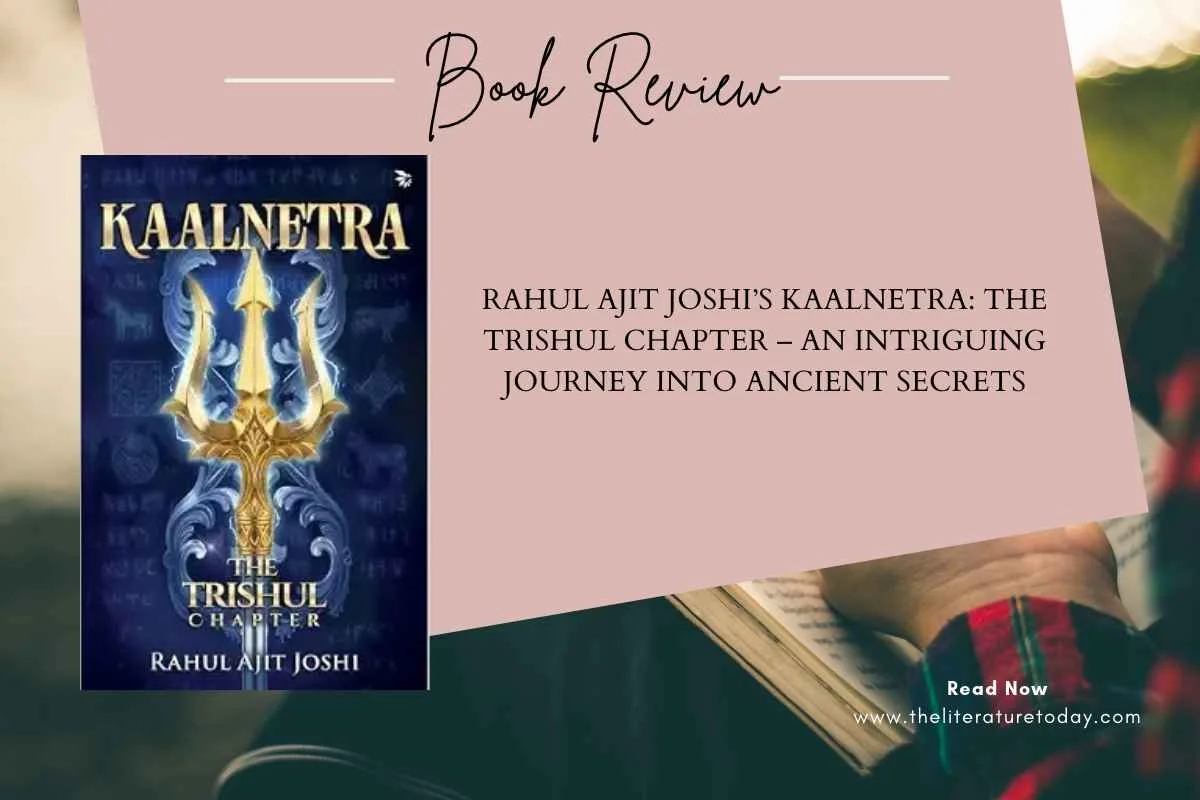
Some books tell a story, while others construct an entire world and invite the readers to step inside it. Interestingly, “Kaalnetra: The Trishul Chapter” by author Rahul Ajit Joshi belongs to the latter category. A gripping blend of mystery, suspense, thriller, mythology, fantasy and speculative imagination, the novel immediately establishes an atmosphere of danger and intrigue that keeps the readers engaged right from its opening pages. What begins with an enigmatic statement about the Trishul gradually develops into an expansive narrative connecting ancient India with the modern world, historical secrets with futuristic possibilities and forgotten knowledge with an impending threat. The result is an ambitious and cinematic reading experience that demonstrates the author’s willingness to explore the intersection of mythology, history, science and imagination.
Author Rahul Ajit Joshi is an Indian author and international business entrepreneur known for his high-stakes, fast-paced mythological techno-thrillers. Based in Navi Mumbai, he is the creator of the acclaimed Kaalnetra Universe, which weaves together ancient Indian mythology, historical statecraft and speculative futuristic science into immersive, pulse-pounding narratives. Rahul’s storytelling philosophy centres on intellectual immersion and cultural resonance. He approaches mythology not as static history, but as an evolving repository of philosophy and strategy. Whereas, this particular title, “Kaalnetra: The Trishul Chapter” is published by Nu Voice Press and is released during the period of July 2026. Also, the book is available in both paperback as well as in e-book format and the readers can find this title on all the top online marketplaces.
The novel’s opening premise is particularly intriguing since, the idea that the Trishul does not regard itself as a weapon, but as a “Witness” and this is something that immediately creates an aura of mystery around the legendary artefact. Rather than treating it simply as an object of power, the narrative gives the Trishul a deeper symbolic and historical significance. It becomes a silent observer of events that have unfolded across centuries, carrying within its existence secrets that humanity has apparently been unable or perhaps unwilling to confront. This conceptual approach gives the central artefact an unusual presence within the story and establishes an important question that continues to drive the narrative: what exactly has the humanity forgotten and why was this knowledge hidden in the first place?
One of the greatest strengths of this novel lies in the author’s decision to connect the story to Emperor Ashoka, as it adds another fascinating layer to the narrative. The historical figure of Ashoka already carries immense significance within Indian history, particularly because of his transformation following the Kalinga War and his subsequent association with Buddhism and the pursuit of peace. Against this historical backdrop, the author’s fictional premise imagines a terrifying secret witnessed by Ashoka and subsequently concealed from the world. This alternate interpretation of a familiar historical era becomes an effective narrative device because it encourages the readers to look at the past from an entirely different perspective. The story does not simply revisit history; it uses history as a foundation upon which an elaborate mystery can be constructed.
Also read : Beyond motivation book review on Manjula shroff 's DHL alchemy
Furthermore, the transition from the ancient world to the modern era is equally compelling. Archaeologist Priya Malhotra’s discovery of evidence suggesting the existence of an ancient network buried beneath India’s sacred sites immediately introduces an investigative dimension to the story. Her archaeological perspective provides a grounded entry point into an increasingly extraordinary mystery. At the same time, historian Arjun Singh’s experience of memories from another life introduces an entirely different form of intrigue. His visions of forgotten wars, impossible technologies and a mysterious guardian connected to the Trishul create a fascinating intersection between history, memory, mythology and destiny. Bringing these two characters together allows the narrative to explore the central mystery from different intellectual and experiential perspectives.
Now, upon reaching the final part of the review, i.e. the Book Verdict, we can conclude that a title like “Kaalnetra: The Trishul Chapter” is for sure a reading worthy title. The book deserves a chance by the readers as it feels like the opening movement of an ambitious and potentially expansive saga. Moreover, author Rahul Ajit Joshi has created a story that thrives on mystery, imagination, historical intrigue and the possibility that humanity’s understanding of its own past may be incomplete. The novel’s strongest quality is its willingness to think big. It does not restrict its mystery to a single location, era or character; instead, it connects the centuries of history with the modern world and places its protagonists at the centre of a conflict whose implications could extend to the future of civilisation itself.
Overall, it is an invitation to enter a world where mythology, history, science, memory and destiny collide, leaving the readers eager to discover what the next chapter of the saga will reveal, which makes this title a MUST READ one!
Book’s Link: Amazon Link











Comments (0)