

Author Spotlight: Sudeep Nagarkar – Bestselling Indian Author & Romantic Fiction Writer

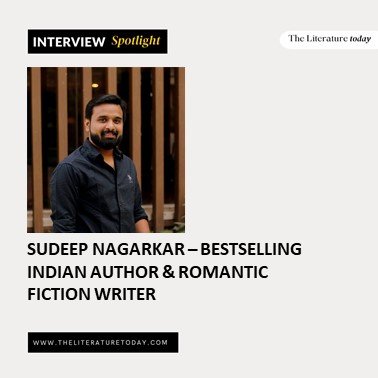
About the author - Sudeep Nagarkar is a popular contemporary Indian author, celebrated for his heartfelt romance and young-adult fiction that deeply connects with readers. Born on 26 February 1988 in Mumbai, he completed his schooling at St. John the Baptist High School, Thane, before pursuing Electronics Engineering from Datta Meghe College of Engineering, Navi Mumbai. He later earned an MBA in Business Management from Welingkar Institute of Management, Mumbai.
His writing journey began with the release of his debut novel, Few Things Left Unsaid in 2011. After the success of his second book, That's the Way We Met, he took a brave step—leaving his IT job to dedicate himself fully to writing. Many of his early books were inspired by his own diary from college days, giving his stories a warm, relatable, and authentic touch.
Over the years, Sudeep has authored several bestselling novels and earned recognition such as the Youth Achievers Award (2013). He has also featured multiple times on the longlist of Forbes India’s most influential celebrities. Beyond writing, he has delivered motivational talks, guest lectures, and even explored scriptwriting for television. With his simple, emotional storytelling and themes rooted in love, friendship, and trust, Sudeep Nagarkar remains one of India’s most loved voices in contemporary romance fiction.
Questionnaire:
1. The Literature Today: You made a bold decision to leave your job in IT after your second book. What was the turning point that convinced you to fully embrace writing as a career, especially in the face of family opposition?
Sudeep Nagarkar: Obviously, it wasn't easy for me to take up writing full-time, as I was working as an MBA graduate in one of the top companies in Mumbai. Although I was convinced that this is something I wanted to do—and thankfully, I had time on my side because I was just 24—it was very difficult to convince my parents. Coming from a middle-class Maharashtrian family, forget entrepreneurship, we are not even used to accepting people who do business. So convincing them was extremely tough. They probably thought, “Ladki kahegi jab rishta aayega, gharwalo ko kya kahenge?” These are common thoughts Indian parents have.
But I was sure. I always tell new writers: when you write your first book, don’t think about making writing a full-time career. Even I had no such thought. Only after my third book became successful did I decide that now was the time when I could monetize my passion and continue writing without the disturbance of a job. I’m being practical—it’s not easy. You have to pay your bills at the end of the day. Passion alone cannot make you quit everything overnight. For me, after my third book in 2013, I finally felt I could stabilize and take the plunge.
2. The Literature Today: Your first two novels, ‘Few Things Left Unsaid’ and ‘That’s The Way We Met’ were inspired by your personal experiences. How did turning your diary entries into full-fledged novels shape your voice as a writer?
Sudeep Nagarkar: Yes, my first two books were inspired by my real life, and honestly, when I wrote those pieces, they weren’t meant to be novels. They were simply honest confessions—expressions of my feelings, how I was going through that frustrating phase, depression, breakups, a couple of years’ drop. That honesty helped me understand that writing is something that gives me peace, something I truly enjoy. But more than shaping me as a writer, it helped me improve as a person.
During a breakup, we always feel we were right, and all the mistakes were on the other side. I was exactly in the same boat. But when I wrote everything down, I realized there were many instances where even I was wrong. Writing helped me self-analyze and change certain things in my behaviour. That was a turning point for me—to flip the narrative of what had happened with me.
3. The Literature Today: Books like ‘You’re The Password To My Life’, ‘You Are Trending In My Dreams’ and ‘She Swiped Right into My Heart’ explore deep friendships. What draws you to this theme repeatedly?
Sudeep Nagarkar: I’ve always been fascinated by friendships, and I value them immensely in my real life. I have very few friends, but they mean more than anything else in this world. If you ask them, even after 17 books and 2 million copies sold, how has Sudeep changed? They’ll say, “He is still our friend.” I’m still the same person I was 15–20 years ago, because I value relationships. In today’s world, where everything revolves around “situationships,” I want to explore friendship because I feel that more than marriage, more than being a father or a son, being someone’s friend is the purest relationship. You can be yourself without fear of judgment or expectations. That is something I always wanted to write about.
4. The Literature Today: ‘It Started with a Friend Request’ beautifully captures love that begins online. How do you think modern technology has changed the way we experience romance?
Sudeep Nagarkar: Modern technology has its pros and cons. When we were in college, if we had to sort out a fight or even break up, we had to actually face the girl or the boy. Today, you can simply block someone and stop the conversation.
That wasn’t the case in our days. We could see the expressions of the other person directly. Today, most people rely on messaging rather than calling, but messages fail to express tone, feelings, and emotions. Eyes, body language, and facial expressions—these matter a lot in a relationship.
Still, I believe emotion, sincerity, and intensity in love remain the same. We often degrade relationships today by calling them “situationships,” or inventing Gen Z terms, but people still look for true love. And when they find it, they appreciate and believe in it. Technology has made things easier, sure—but the new generation should not be blamed for how they communicate.
5. The Literature Today: In ‘Sorry You’re Not My Type’, the story of a college band brings in themes of passion, betrayal, and friendship. What inspired you to blend music into the emotional core of the story?
Sudeep Nagarkar: Sorry, You’re Not My Type is actually a true story. When I began writing it—it started with a friend request—I had no intention of writing about a musical band. When I was in Delhi, I met a person who was part of a band, and he narrated his story to me because he knew I was a writer and wanted their journey to be expressed. I believe nothing is fiction in this world. Every story reflects something from society. My initial books were mostly true stories, and this one is no different. The band actually existed. Their journey inspired me deeply—it had so many positive messages, and it also revolved around friendship, which is a theme I always want to hold on to.
6. The Literature Today: Interestingly, your 8th novel, ‘All Rights Reserved for You’, is a tribute to your love story with Jasmine. What was it like narrating something so close to your heart to a wide audience?
Sudeep Nagarkar: Okay, when I was writing All Rights Reserved for You, it was one of my toughest experiences. I’ll tell you why. It wasn’t that I was writing my love story for the first time. I’d already done it in Few Things Left Unsaid and That’s the Way We Met. But there’s a difference. When I was writing those books, I wasn’t in touch with the girl. She wasn’t in my life anymore, and I was expressing my side. I was expressing my honest expressions.
But when it comes to All Rights Reserved for You, I was very sure that even people from Jasmine’s side, especially her parents, are going to read it. And when I was writing it, obviously Jasmine was aware of it. So, she was monitoring what all I was writing. So, there was an editor before the book was even written.
So, it was one of the toughest experiences but even the sweetest of all. Because I was getting those expressions from Jasmine whenever I used to send her a chapter. There were a lot of things. In real life, I’m a very shy kind of a person. If you have read the book, I have proposed to her in a hot air balloon. So even that happened because I had this pressure of being a romance writer. Else, I wouldn’t have done that and I’ve never done that after that particular incident. I’ve never done that even today. Nothing of that sort. I’m a very shy kind of a person.
So when I was expressing my true feelings, it was the first time for even Jasmine. She also realized many things that I probably couldn’t have said. So it was very sweet of her also to accept it. Because it’s not easy to make your life public but she never said no to it. So, all thanks to her to be very honest.
7. The Literature Today: Many of your characters are college students or young adults navigating complex relationships. How do you keep your storytelling relatable to today’s youth?
Sudeep Nagarkar: Keeping my storyline relatable to today’s youth—it's not because the characters are from college life or they’re teenagers facing those complex problems. There are books like A Second Chance, which talk about how a journey in an arranged marriage can get complex just because of your own fears and flaws and your internal struggle. There’s a book, Kann Ka Quarantine Love, which again talks about a mature love. So they’re still connected with the youth. I believe that if you are giving out the right expression to those characters, somewhere the audience has this tendency to make it their own, like probably it’s their story or it’s something that they can relate to. So more important is the hidden layer whenever you are giving away that storytelling.
Your characters are definitely your outer layer; the storyline is the outer layer. The nuances that the characters have and the situations they are going through can be considered as the inner layer. But the hidden layer is what you want to convey through that storyline, which is hiding beneath the surface of that story. And if you are right on that aspect, it will relate, it will connect with the audience
9. The Literature Today: You’ve written scripts for Marathi shows and worked with TV channels like Colors and Sony. How different is storytelling for the screen compared to writing novels?
Sudeep Nagarkar: See, when I wrote for the screen, the experience was totally different. When it comes to books, you have the liberty to showcase whatever you want — whatever place, whatever situation. I can definitely show that my male character is proposing to a girl in a hot air balloon, or on a cruise, or wherever I want to, just with an imaginary situation. But there are logistics when it comes to screen — whether the production house has that budget or not. So you need to keep a lot of things in mind when you’re writing a script for television.
That was totally new for me, but I learned how to engage the audience in the first five minutes of the episode, because otherwise, they are going to change the channel. That’s not the case with a book. Readers don’t judge you by just one chapter. They give you time, they give the character time, they try to bond with that character over a few chapters. But that’s not the case with the screen. So your storytelling there is totally different — an absolute contrast to what you write for novels
10. The Literature Today: Receiving the “Youth Achievers” award in 2013 must have been a defining moment. How has that recognition influenced your journey as one of India’s bestselling romance authors?
Sudeep Nagarkar: When I received the Youth Achievers Award, that was probably the validation that I wanted. More than me, it was for my family. Till that moment, It Started With a Friend Request had just been released. And at that time, I got the support, and that helped me tell my parents that this is something I want to do. I asked them to give me a couple of years. If things go well, nothing like it — else I’ll switch back to my job. But honestly, internally, I was completely aware that doing a job wasn’t a choice at all. That wasn’t something I wanted to do. This was something that gave me happiness.
And at that moment, my parents also agreed. Otherwise, till that time, they were like, ‘You shouldn’t leave your job, all things are fine, but this cannot be your career.’ Time to time they used to inculcate this in me. But I was very sure — and the moment I got that award, things really changed.
11. The Literature Today: Recent titles like ‘The Secrets We Keep’, ‘Stand by Me’ and ‘A Second Chance’ suggest more depth and emotional exploration. How has your writing evolved?
Sudeep Nagarkar: Coming to your next question — with time, my writing has evolved in terms of storytelling. I won’t say writing per se, but definitely in storytelling I have evolved. Every story has made me a better person and helped me understand different situations of life. When I wrote my initial books, they were very raw.
But if you ask me what is that one thing I want to change in my initial books, I will say: I won’t change a single chapter, because those raw emotions connected with the readers at that time. And I won’t change it whatsoever. But when I read those books now, I feel I could have done a better job — I could have added more cliffhangers, I could have made the storyline crisp. That is something I have explored over time. I have explored the inner struggles of the character as well — that is something that was missing in my initial books. So definitely, with time, I have given more importance to shaping the character and narrating the story through the character’s voice.”
12. The Literature Today: You’ve written so much about love, friendship, and relationships. Now that you’re a father, has your definition of love changed in any unexpected or funny ways?
Sudeep Nagarkar: Since Vamika is born, many things have changed in a pleasant way. We’re still coping up and adjusting to this new phase of our lives. Our definition of love, the meaning of companionship, has drastically changed for us. Earlier, it was more about late-night conversations, watching Netflix together, planning surprises for each other. These days, it’s more about sending texts like, ‘Did she poop?’ ‘Did she burp?’ We have hardly watched television for the last eight months. Everything revolves around her.
I mean, nobody prepares you for fatherhood or parenthood. It’s a feeling. And I never thought that I could be so gentle, that I could have so much warmth for kids. I hated kids. But when Vamika was born, I felt that connection in an instant. I don’t know — I never realized it, I never gave it a thought. But honestly, in all this chaos, I have realized that love isn’t just romance. It’s partnership, its teamwork, and sometimes it’s just silently handing over the diapers, the baby creams. It’s an unsaid feeling.
Earlier, it was more about getting those butterflies in the stomach. Now it’s more about baby food. The world is revolving around her. Eight hours, ten hours of sleep now feels like luxury — and I’m not exaggerating at all. But everything feels worth it. You realize after looking into her eyes, that she is giving you that unconditional love. The meaning of unconditional love was actually redefined for me. So that is how it is.
13. The Literature Today: If your Daughter were to read all your love stories 15 years from now, which book would you secretly hope they say, “Dad, this one’s my favourite,” — and why?
Sudeep Nagarkar: Now, that's a really tough question — after 15 years, if she reads any of my books. Again, I never gave it a thought, to be very honest. But definitely, All Rights Reserved for You will be one of the books that I want her to read. That’s the love story of her parents and the struggle that we have gone through. So that is something I would definitely want her to read. But maybe someday, I’ll write about a father-daughter bond. I’ve never written about it till now because I had never experienced it, and that’s why I didn’t want to even touch that topic. But now that I’m realizing it, I’m still in that learning phase. So maybe after a couple of years — I don’t know if it will be concrete also — but if I ever write about it, then that one will be the book I would love her to read. And it would be written in a way where maybe she’ll read it someday, and she’ll realize how her presence transformed a reckless, unplanned guy into someone who really cares about relationships now. Cares about bonding, cares about giving time, and slowing down in life. So definitely, I would want her to read that one.






Comments (0)