

Ashoke Sen Becomes First Indian Physicist to Receive the Oskar Klein Medal 2026
 Mariyam Yasser
Author
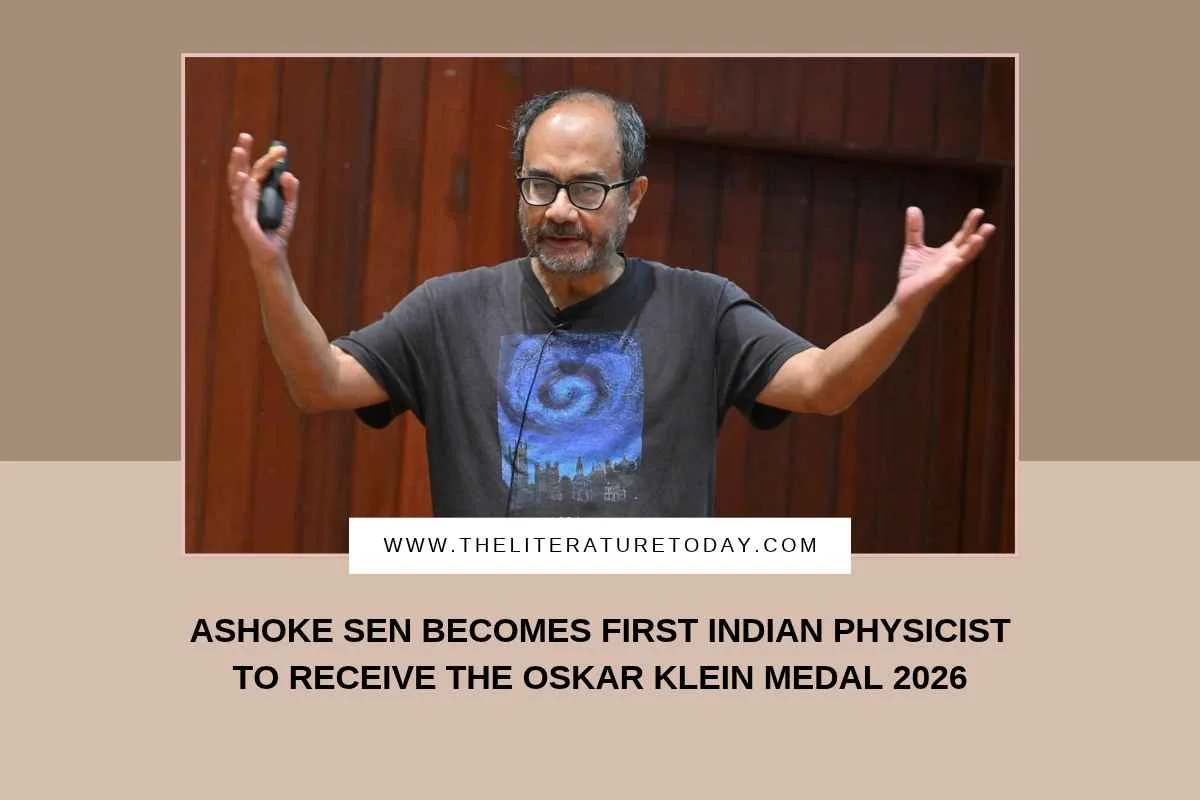
The renowned theoretical physicist has been recognised for his pioneering contributions to string theory, including S-duality, black hole entropy and string field theory.
Indian theoretical physicist Professor Ashoke Sen has been awarded the prestigious Oskar Klein Medal for 2026, becoming the first Indian physicist to receive the honour. The Bengaluru-based International Centre for Theoretical Sciences (ICTS) announced the achievement on Saturday, October 24, 2026.
Sen, who serves as an ICTS-Infosys Madhava Chair Professor, is internationally recognised for his groundbreaking research in theoretical physics. His work on S-duality, the precise counting of black hole entropy and string field theory has played a significant role in shaping modern string theory.
The award marks another milestone in the distinguished career of a scientist whose research has contributed to a deeper understanding of the fundamental principles governing the universe.
Ashoke Sen Delivers the 2026 Oskar Klein Memorial Lecture
As part of the recognition, Professor Sen delivered the 2026 Oskar Klein Memorial Lecture, titled Gravity from Strings and Strings from Gravity, on October 22 at Stockholm University's AlbaNova Centre in Sweden.
The lecture explored themes connected to the relationship between gravity and string theory, reflecting Sen's longstanding contributions to one of the most important areas of modern theoretical physics.
According to the ICTS, Sen's research has helped establish the unifying structure of string theory, a framework that seeks to describe the fundamental constituents of nature and their interactions.
A Distinguished Career in Theoretical Physics
The Oskar Klein Medal adds to an impressive list of national and international honours received by Professor Sen throughout his career.
In 2012, he received the Breakthrough Prize in Fundamental Physics for his contributions to establishing the unifying structure of string theory. Two years later, in 2014, he was awarded the Dirac Medal in recognition of his scientific achievements.
His other major honours include:
- Infosys Prize in Mathematical Sciences (2009): Recognising his contributions to mathematical sciences.
- Shanti Swarup Bhatnagar Prize (1994): One of India's prominent scientific honours.
- ICTP Prize (1989): Awarded for contributions to theoretical physics.
- Padma Shri (2001): One of India's civilian honours.
- Padma Bhushan (2013): Awarded for distinguished service and achievements.
Sen was also elected a Fellow of the Royal Society in 1998, further reflecting the international recognition of his scientific contributions.
ICTS Director Congratulates Professor Sen
Congratulating Professor Sen on receiving the medal, ICTS Director Rajesh Gopakumar praised his association with the institution and his contribution to its academic culture.
“On behalf of all of us, very warm congratulations to Ashoke. It has been no less than wonderful having Ashoke with us and setting the tone for excellence here at ICTS,” Gopakumar said.
Sen's achievement is a significant moment for India's theoretical physics community, highlighting the international impact of research conducted by Indian scientists.
What Is the Oskar Klein Medal?
Named after Swedish theoretical physicist Oskar Klein, the Oskar Klein Medal recognises distinguished contributions to physics. Established in 1988, it has been awarded to several leading figures in the field.
Previous recipients include Nobel laureates Chen-Ning Yang, Steven Weinberg and Hans Bethe, who received the medal during its first three years, respectively.
The award is presented annually by Stockholm University and the Nobel Committee for Physics of the Royal Swedish Academy of Sciences.
Professor Sen's selection places him among the distinguished physicists recognised for advancing scientific understanding through exceptional research.
Must read : Shithya akademy awards 2025
A Milestone for Indian Science
Professor Ashoke Sen's receipt of the 2026 Oskar Klein Medal underscores the global significance of his contributions to theoretical physics. His research into string theory, black hole entropy and the mathematical structures underlying fundamental physics has helped advance scientific understanding of some of the universe's most complex questions.
Becoming the first Indian physicist to receive the honour also marks an important milestone for India's scientific community, bringing international attention to the country's contributions to fundamental research.
As Sen continues to be recognised among the leading figures in theoretical physics, the award celebrates not only his individual achievements but also the enduring importance of curiosity-driven scientific research.







Comments (0)