

A Concise History of Time is 'off-base', Stephen Hawking told teammate
 Aanchal Singh
Author
Aanchal Singh
Author
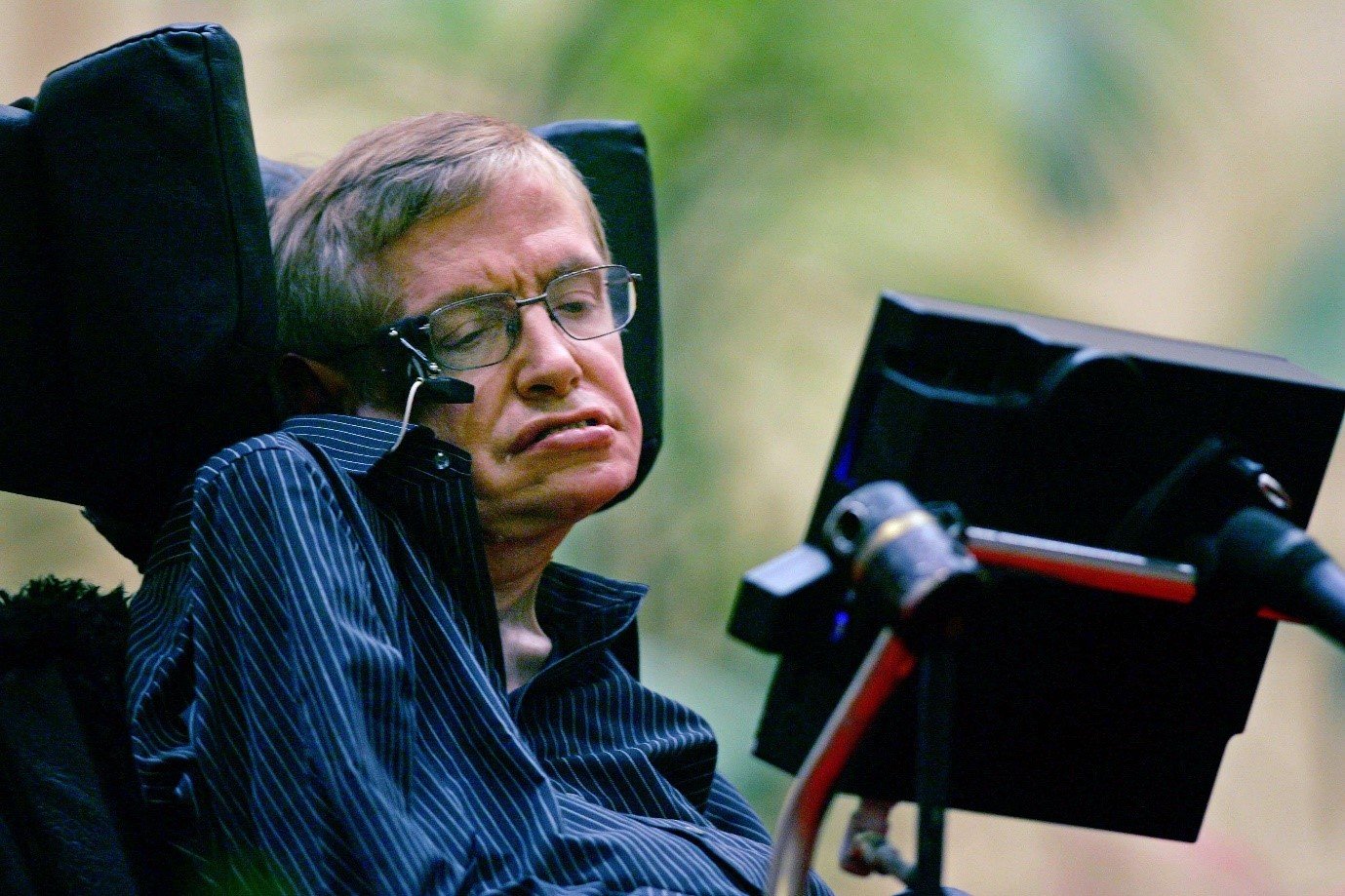
Thomas Hertog worked with cosmologist on another book after he shared his questions about A Short History of Time
In 2002 Thomas Hertog got an email bringing him to the workplace of his coach Stephen Selling. The youthful scientist hurried to Selling's room at Cambridge. "His eyes were brilliant with fervor," Hertog reviews.
Composing on the PC controlled voice framework that permitted the cosmologist to convey, Hawking reported:“I have changed my mind. My book, A Brief History of Time, is written from the wrong perspective.”
In this manner one of the greatest selling logical books in distributing history, with overall deals credited at more than 10m, was transferred to the waste receptacle by its own writer. Hawking and Hertog then, at that point, started dealing with a better approach to typify their most recent pondering the universe.
One month from now, five years subsequent to Peddling's demise, that book - On the Beginning of Time: Stephen Selling's last hypothesis - will be distributed in the UK. Hertog will frame its beginnings and topics at a Cambridge celebration address on 31 March.
“The problem for Hawking was his struggle to understand how the universe could have created conditions so perfectly hospitable to life,” says Hertog, a cosmologist at present based at KU Leuven College in Belgium.
Instances of these life-supporting circumstances incorporate the fragile equilibrium that exists between molecule powers that permit science and complex particles to exist.
Also, the reality there are just three elements of room licenses stable planetary groups to develop and give homes to residing animals. Without these properties, the universe would likely not have delivered life as far as we might be concerned, it is contended by certain cosmologists.
Hertog and Hawking were determined to work out clarifications for this condition of heavenly vulnerability after the last option had concluded his past endeavors were lacking.“Stephen told me he now thought he had been wrong and so he and I worked, shoulder to shoulder, for the next 20 years to develop a new theory of the cosmos, one that could better account for the emergence of life,” Hertog said.
It was an exceptional coordinated effort yet not a simple one. At the point when he was 21, Selling had been determined to have a beginning stage slow-advancing type of engine neurone infection that continuously deadened him.
When he started working with Hertog, he had been selected Lucasian teacher of math at Cambridge College, one of the world's most renowned scholarly posts (Isaac Newton was a past holder), and had delivered a progression of striking speculations about broad relativity, dark openings and the beginning of the universe as well as his hit A Short History of Time. Nonetheless, his condition had crumbled. He was in a wheelchair and could impart utilizing a little PC from which he chose words conveyed by a discourse synthesizer.
“Halfway through our collaboration, he lost the remaining strength in his hand to press the clicker which he used to converse,” says Hertog. So Peddling changed to a sensor mounted on his glasses that could be enacted by jerking a cheek muscle, yet entirely in the end even that become excessively troublesome.
He eased back from a couple of words each moment to a few minutes for every word, Hertog said. Eventually, correspondence halted. . “I used to position myself in front of him and fire questions and would look into his eyes to see if he was agreeing or disagreeing. By the end, I could detect several levels of no and several levels of yes with a few in between.”
It was out of these "discussions" that Selling's last hypothesis was conceived and, related to Hertog's own investigation, they structure the premise of On the Beginning of Time, a book that takes its title from Charles Darwin's On the Beginning of Species. "Eventually, we both came to consider physical science in a manner substantially more like our thought process of science. We have placed physical science and science on a similar balance."
As per Hertog, On the Beginning of Time manages inquiries concerning our spot in the universe and what compels our universe fit forever. “These questions were always in the background in our scientific publications. What I have done for this book is to make these questions central and tell our story from that perspective. Stephen and I discovered how physics itself can disappear back into the big bang. Not the laws as such but their capacity to change has the final word in our theory. This sheds a new light on what cosmology is ultimately about.”
As per Hertog, the new point of view that he has accomplished with Peddling turns around the order among regulations and reality in physical science and is "significantly Darwinian" in soul. “It leads to a new philosophy of physics that rejects the idea that the universe is a machine governed by unconditional laws with a prior existence, and replaces it with a view of the universe as a kind of self-organising entity in which all sorts of emergent patterns appear, the most general of which we call the laws of physics.”











Comments (0)