

Dussehra: We Burn Ravana Every Year, But What About the Ravana Within Us?
 Mariyam Yasser
Author
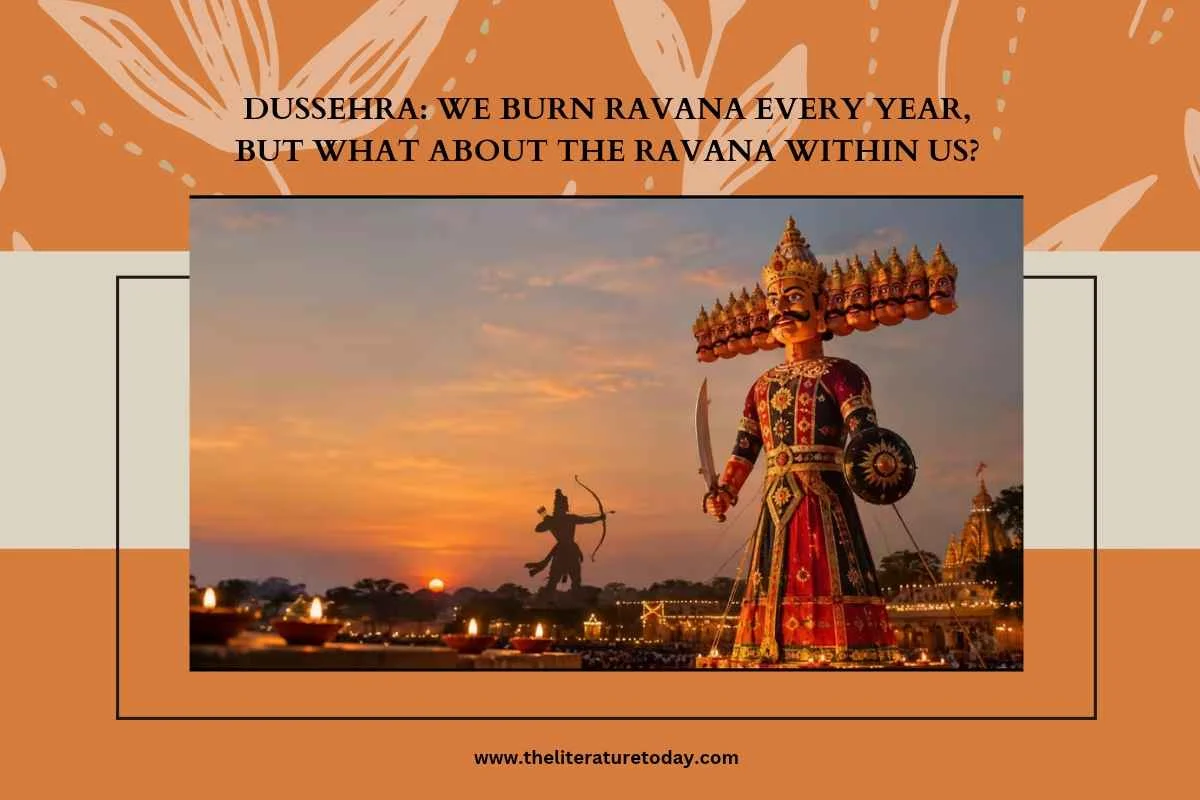
Every year, as autumn settles in and the festive spirit fills the air, India prepares to celebrate Dussehra. Markets grow lively, homes are filled with warmth, and the familiar sounds of Ramleela bring communities together. In many places, the highlight of the evening is the burning of Ravana’s towering effigy, a moment that draws crowds of people, from excited children to adults who have witnessed the tradition for decades.
Yet, beyond the celebrations, the fireworks, and the familiar stories, Dussehra holds a deeper meaning. It reminds us of something we often forget in the rush of everyday life: the importance of looking within ourselves.
At its heart, Dussehra celebrates the victory of good over evil. The festival is traditionally associated with Lord Rama’s victory over Ravana, bringing an end to the great conflict described in the Ramayana. In many parts of India, it also marks the victory of Goddess Durga over Mahishasura, following the nine days of Navratri. Although the traditions vary across regions, the message remains closely connected to courage, righteousness, and the choices we make in life.
But perhaps the most meaningful part of Dussehra is not the moment Ravana burns.
It is the thought that stays with us after the flames have faded.
The Ravana We Do Not See
Ravana is remembered as a powerful king of Lanka, a learned scholar, and a devoted follower of Lord Shiva. His character is complex, and his story reminds us that knowledge, power, and achievement do not always lead to wisdom.
It is a lesson that feels just as relevant today.
Most of us have our own struggles, though they may not be visible to the people around us. Sometimes, it is anger that refuses to settle. Sometimes, it is pride that makes an apology difficult. It could be jealousy that affects a friendship, fear that holds us back from taking a chance, or resentment that we carry long after a disagreement has ended.
We rarely think of these feelings as battles, yet they can influence our decisions, shape our relationships, and take away our peace of mind.
Perhaps that is why Ravana's story continues to resonate across generations.
The ten heads of Ravana are often interpreted as symbols of human weaknesses. While interpretations differ, the symbolism offers an interesting way to reflect on our own lives. We may be quick to recognise the flaws of others, but looking honestly at our own shortcomings requires a different kind of courage.
Sometimes, the hardest person to change is ourselves.
And perhaps the most important victory is learning to do just that.
Why Do We Still Celebrate Dussehra?
Traditions continue because they mean something to the people who keep them alive. Dussehra is a beautiful example of how a festival can hold different meanings for different generations, bringing together faith, memories, and personal experiences.
For a child, the festival might be all about the excitement of watching Ravana's effigy burn. For someone growing older, it may bring back memories of standing in a crowded Ramleela ground with family, waiting eagerly for the next scene. A parent might find joy in watching their children experience the same traditions they once enjoyed.
For someone going through a difficult period in life, Dussehra might offer something quieter but equally meaningful: a reminder that difficult times do not have to define the rest of our lives.
There is something comforting about a festival that returns every year with a message of hope. It reminds us that life is constantly moving forward and that even after setbacks, there is room for a fresh beginning.
That is the beauty of Dussehra. It does not mean the same thing to everyone, yet it gives each person a reason to pause and reflect.
For some, it is an expression of faith. For others, it is about family, tradition, and belonging. And for those facing personal challenges, it can be a gentle reminder to keep going.
From Ramleela to the Modern World
One of the most cherished traditions associated with Dussehra is Ramleela, the dramatic retelling of the Ramayana. Every year, performers bring familiar characters and stories to life through dialogue, music, costumes, and expressive performances.
For audiences, these performances are more than a form of entertainment. They create a connection between generations, allowing stories passed down through centuries to remain part of everyday cultural life.
What makes these stories enduring is their ability to speak to people in different times and circumstances.
The world around us may have changed dramatically, but human emotions remain familiar. We still struggle with ambition, anger, loyalty, love, responsibility, and the desire to make the right decision when the easier option seems more appealing.
The Ramayana invites us to think about these choices. It encourages us to reflect on the consequences of our actions and the values that guide us, especially when life becomes complicated.
Every generation discovers something new in these ancient stories. Perhaps that is what keeps them alive, not simply the fact that they are remembered, but that they continue to raise questions worth asking.
More Than a Celebration
Beyond its religious and cultural significance, Dussehra is also a celebration of togetherness.
Families make plans to attend local festivities, children look forward to the evening celebrations, and communities come together to organise performances and events. Behind the scenes, artisans, craftspeople, performers, and organisers work hard to bring the celebrations to life.
For many people, these shared experiences become some of their fondest memories of the festive season.
In a world where daily routines increasingly revolve around screens, busy schedules, and individual responsibilities, festivals offer a welcome opportunity to reconnect. They encourage us to step outside our usual routines, spend time with loved ones, and participate in something larger than ourselves.
There is a special warmth in standing among a crowd, listening to familiar stories, sharing a smile with a stranger, or watching a child experience a tradition for the first time.
These moments may seem ordinary, but they are often what make festivals memorable.
Dussehra reminds us that celebration is not only about what we believe. It is also about the people we share our lives with and the memories we create together.
What Should We Take Home From Dussehra?
Perhaps the most meaningful way to celebrate Dussehra is to ask ourselves a simple question: what are we ready to leave behind?
It could be an old resentment that has taken too much space in our minds. It could be a habit that affects our well-being, an ego that prevents us from listening, or a fear that keeps us from pursuing something important.
Maybe there is someone we need to forgive. Maybe there is an apology we have been avoiding. Or perhaps we simply need to stop believing that we are incapable of changing.
These are not easy things to confront. Personal growth rarely happens overnight, and letting go of familiar habits can be uncomfortable. But change often begins with the willingness to acknowledge what needs to be different.
The symbolic fire of Dussehra lasts only a few moments. The change it inspires, however, can continue long after the celebrations are over.
And that is where the festival becomes deeply personal.
Victory does not always mean defeating someone else. Sometimes, it means finding the courage to admit that we were wrong. Sometimes, it means choosing patience when anger feels easier, offering kindness when we are hurt, or beginning again after a disappointment.
There are also quieter victories that deserve recognition. Learning to set healthy boundaries, asking for help when we need it, or choosing not to repeat a mistake can be just as meaningful as any outward achievement.
We may not overcome every weakness at once, but even a small step towards becoming a better version of ourselves is worth celebrating.
Must read : Significance of Dhanteras and deepawali
The Fire After the Fire
When the celebrations end, the crowds begin to disperse, and the streets slowly return to normal, the remains of Ravana's effigy tell their own quiet story.
The flames have disappeared, but the message remains.
Every year, we watch Ravana burn and remember the victory of Lord Rama. Every year, we have another opportunity to think about the values we wish to live by and the kind of people we want to become.
Perhaps the true spirit of Dussehra lies in the small choices we make once the festivities are over. It is reflected in the patience we show our families, the honesty we bring to our work, the compassion we offer others, and the humility to recognise our own mistakes.
These victories rarely attract applause. There are no fireworks to mark them, no crowds to witness them, and no grand celebrations at the end. Yet they can make a lasting difference to our lives and to the lives of those around us.
Dussehra continues to matter because its message reaches beyond the boundaries of tradition. It invites us to look at ourselves with honesty, to recognise the things that hold us back, and to believe that change is possible.
As another Dussehra arrives, perhaps we can carry home more than the memory of a spectacular celebration. We can carry a promise to be a little more patient, a little more understanding, and a little more courageous in the face of our own challenges.
Because sometimes, the most meaningful victories are the ones nobody else sees.
This Dussehra, may we find the courage to conquer not just the challenges around us, but also the weaknesses within us.
Wishing you and your loved ones a happy and meaningful Dussehra.










Comments (0)