

Riya Nayak: Lawyer, Poet, and Author of Meera | An Exclusive Interview

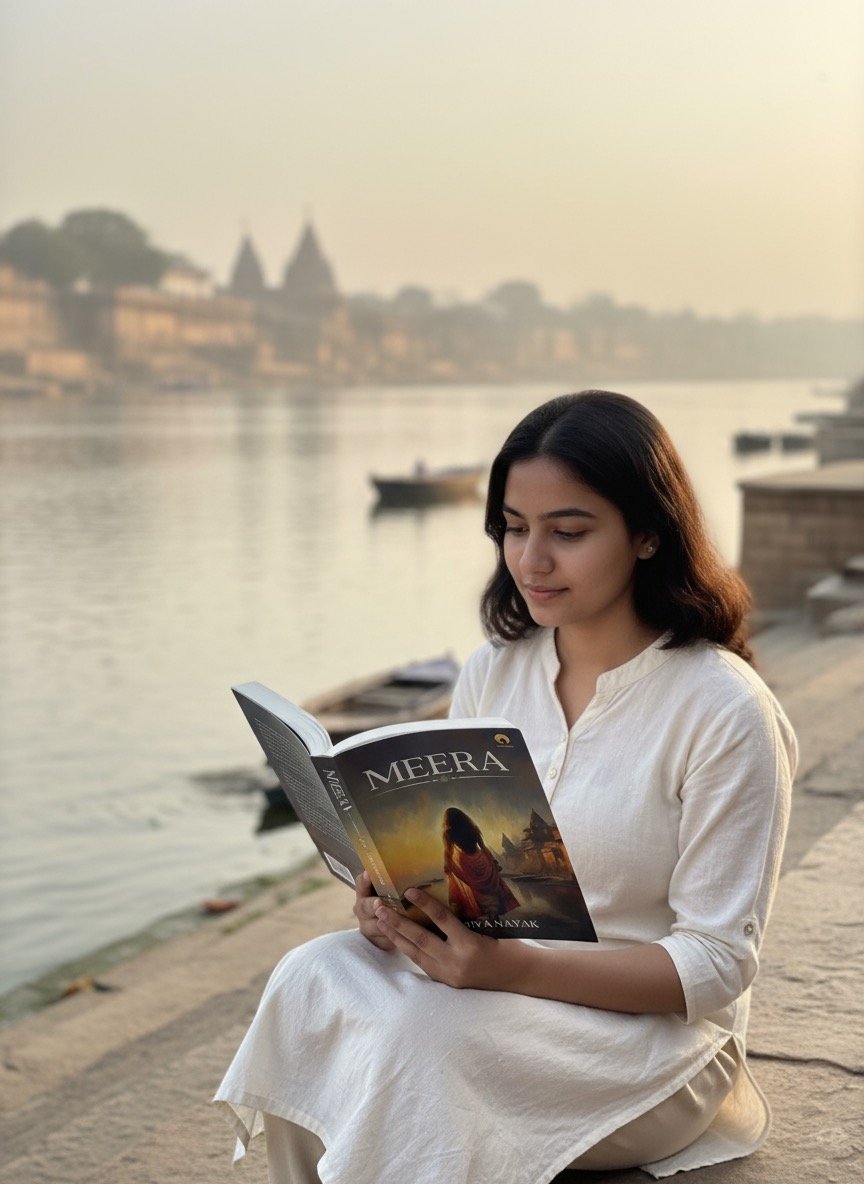
Riya Nayak is a lawyer, poet, and emerging author from Bihar, currently practicing as an advocate at the Patna High Court. Born in 1999, she completed her legal education at Symbiosis Law School, Pune, and is preparing for the state judicial services examinations. Writing has been a constant in her life since the age of twelve, beginning with poetry performances in school and later at open mic platforms in Pune.
She made her literary debut in 2018 with a self-published poetry collection, Kuch Kehti Kavitayein, available on Amazon and Flipkart. Her debut fiction novel, Meera, written during her college years, was published in 2024 by Locksley Hall Publishing House with representation from Book Bakers Literary Agency. Balancing law and literature, Riya continues to explore human emotions through poetry and fiction, steadily shaping her voice as a storyteller.
Questionnaire:
The Literature Today: Your journey from performing poems in school assemblies to becoming a published author and practicing lawyer is remarkable. How did these parallel identities shape the emotional and philosophical layers of “Meera”?
Riya Nayak: However different these two worlds may seem—law and poetry—they share the same essence: philosophies deeply driven by emotions. I believe I became a lawyer because I was a poet first; my mind recognized the silent poetry of law, something I simply could not resist. Poetry has given me courage to think and ask questions; it is a great way of expression, and in some cases, it is the only way of expression.
It might sound unusual, but some thoughts really do require courage. When you allow yourself the courage to think them fully, that is the moment philosophy starts to take place in your life. Poetry is nothing but musical philosophies. Similarly, Law as well is deeply rooted in philosophies and faith. The reasonings, the logics, the realistic point of views, are all standing on a common ground that is legal philosophies and faith for a better and a just society – this is too, in a way, poetic.
So no, law and poetry didn’t create parallel identities for me, they in fact, created a perfect cocktail. And this combination has given ‘Meera’ the emotional and philosophical layers you find in the book.
The Literature Today: You began writing at the age of twelve. How did that early bond with poetry influence the lyrical, whisper-like emotional texture we see in “Meera”?
Riya Nayak: You must have noticed that artists who do not care to explain their emotions but have a strong urge to express them, either create paintings or write poetry. What they are doing through this is quietly releasing their feelings into the world and waiting for those who have the heart to understand; in that recognition, they find a rare and intimate connection with others, and others find a sense of belonging in them as well.
This intimacy is something I want Meera to have with her readers. And I want the readers to have a sense of belonging, a sense of relativity, with Meera. Something poetry had given me, I wanted to share.
The Literature Today: As someone deeply rooted in law and logic, what drew you toward a genre that blends magical realism, spirituality, and philosophical dialogue?
Riya Nayak: The only thing I truly share with Meera is the stubbornness to believe in nothing until I have given it a fair amount of thought and analysis. This habit teaches me to ask questions, to discover more, to learn better – something you will find in Meera as well.
And when such learning turns toward self‑discovery and self‑awareness, somewhere along the way you inevitably encounter spirituality and philosophy—about the self and the larger reality of the universe. We are all in the process of learning; we all experience reality differently; we are all equally right and equally wrong when it comes to faith and philosophy. If that is the case, then it feels like a wise choice to believe in a reality that holds, at the very least, a little bit of magic.
The Literature Today: The story revolves around three women navigating devotion, love, and existential questioning. What inspired you to craft a narrative led entirely by female voices?
Riya Nayak: A writer can never speak convincingly about what they do not know. Every story – whether fiction, fantasy, or biography – carries the author’s own truth, wrapped in imagination and language; what changes from book to book is only the proportion of truth to invention. My truth is that I am a woman: I have lived as a woman, I think as a woman, and I long for the things a woman longs for. I will never experience the world the way a man does, and however hard I try, I cannot borrow a man’s voice.
In Meera, I have therefore written from the place I know best. I have given the novel strong female voices and unapologetically feminine points of view, because those are the lenses through which I understand the world, philosophy, faith, and love. The female perspective is not a limitation for me; it is my deepest, most honest source of storytelling.
The Literature Today: “Meera” is described as a “mind-to-mind sparring match.” How did you balance the intellectual density of the book with the emotional sensitivity your readers connect with?
Riya Nayak: Nothing teaches you more than a good conversation, a truly engaging and productive exchange of ideas. If you have read the book, you may have noticed that Meera is very reserved when it comes to sharing her mind, but she has no filter when it comes to asking questions. She is never worried about offending someone or getting the “wrong” answer; what matters to her are the reasons the other person has for believing what they believe. You may also have seen that Meera rarely adopts those answers or beliefs as her own. Instead, she arrives at her own way of seeing things, guided by her observations and inner questioning.
Through this, the idea shared with readers is that the real choice is never only between two existing options. What already exists is not the limit of possibility; when it comes to philosophy and faith, we have much wider playing ground, and we cannot be more right, or more wrong than others.
The Literature Today: You wrote this book during your law school years. How did your academic environment in Pune influence the themes of introspection, identity, and inner conflict?
Riya Nayak: That was a period of intense learning for me. I was discovering myself, trying to understand what truly mattered and what didn’t. Around the same time, I was failing at many things but winning at a few, and those small victories kept me motivated. Looking back now, I believe all that pressure and conflict shaped me profoundly—perhaps it also shaped Meera, because her story grew from that same phase of my life.
The Literature Today: The book challenges conventional ideas around gods, rituals, and devotion. Were there specific personal experiences or cultural observations that shaped these reflections?
Riya Nayak: For the longest time, I was someone who refused to believe in Gods. As long as the idea came from a rigid, unquestionable source, it made no sense to me. I always found pre‑existing faiths about the divine deeply contradictory. For a while, I was convinced that either the faiths were wrong or the Gods were man‑made, and I tried to understand which of these could be true. Over time, I realized that both faith and Gods are equally misunderstood, and that realization became the ground on which Meera was born. Unlike me, Meera never denied the existence of Gods, but she, too, struggles to accept the rigid, pre‑defined ideas of who they are.
The Literature Today: Your writing style in “Meera” whispers rather than shouts emotions. Was this understated approach a conscious creative choice or a natural extension of your poetic voice?
Riya Nayak: ‘Meera’ is a journey of discovering and exploring the realm of a very different reality. The book explores the idea and philosophy of faith, devotion and love in a very grounded and personalized manner. But nowhere in the book the intention is to answer any philosophical, religious, ideological or even personal questions. The book is more about who Meera was, how she learnt what she believes in and how those beliefs shaped her life. “Meera” nowhere tries to impose any emotion or thought on her readers. And when the intention is not to impose or force, but only to drive and inspire, you do not need to shout, a whisper is enough.
The Literature Today: As a lawyer preparing for judicial services, how do you compartmentalise the analytical rigour of law with the emotional nuance required for storytelling?
Riya Nayak: Nothing needs more rigorous analyzing than emotions, I believe. Facts and thoughts are easy to recognize and trace, but emotions are confusing, for me at least. It was, in fact, my conflicts with emotions which has taught me questioning and analyzing. So, in a way, emotions have not only made be a storyteller but also a better lawyer.
The Literature Today: The themes of understanding, acceptance, and quiet strength in love stand out strongly in the book. Which of these themes resonates most deeply with you personally, and why?
Riya Nayak: Personally, I struggle with all of them. Understanding, acceptance, and quiet strength in love, does not come as easily for me as it does for Meera.
The Literature Today: Your book, “Meera” feels like the beginning of a new creative chapter for you. What kinds of characters or narratives are you eager to explore next as you evolve both as an advocate and an author?
Riya Nayak: Meera is my dream project, a book that took years of hard work, discipline, and quiet devotion. I carried it through countless phases of self-doubt and disappointment, and I am still slowly learning to believe that Meera is truly out in the world and that the book I hold in my hands is real. For now, I am allowing myself to savor this milestone. At the same time, my current focus is on preparing for the judicial examinations, which remain a major goal in my life. But if a new story or character finds me along the way, I know I will give it nothing less than the same love, commitment, and honesty that I poured into Meera.





Comments (0)