

An Exclusive Interview with Author Shubha Apte

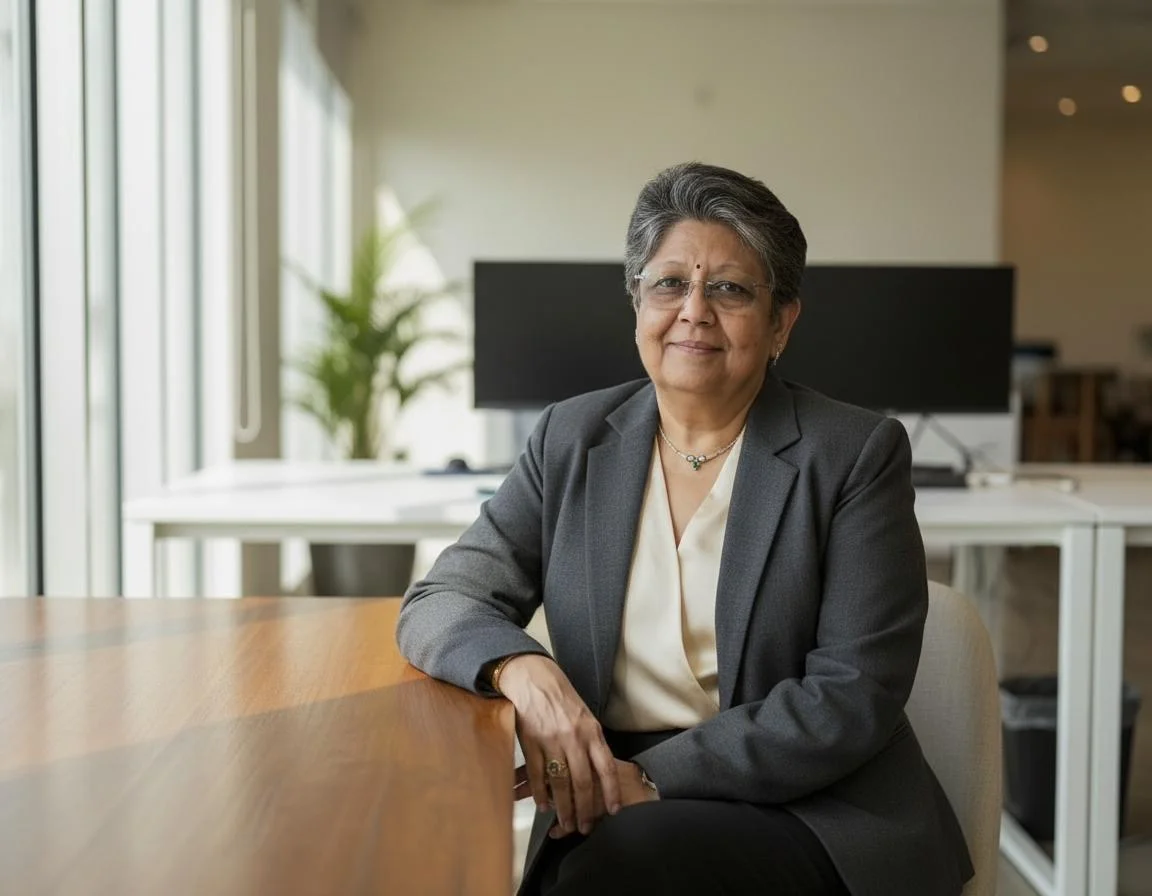
Author Shubha Apte is an engineer by profession, a certified executive coach and a seasoned management consultant with over 35 years of experience in the corporate world. Her deep understanding of leadership, human behaviour and organizational dynamics informs much of her writing!
Questionnaire :
The Literature Today: With over 35 years in the corporate world, how has your professional journey influenced the way you observe people and their stories?
Shubha Apte: My 35-plus years in the corporate world have taught me that behind every designation and professional role is a person with a story. Working across organizations, cultures, functions and leadership levels, I have seen people succeed, struggle, deal with failure, overcome uncertainty and reinvent themselves. As I moved from corporate leadership to mentoring and executive coaching, I became increasingly curious about what lies beneath visible behaviour—their aspirations, fears, relationships, choices and experiences.
This has deeply influenced the way I write. I tend to look beyond the obvious. A simple conversation, a moment of silence, a difficult decision or an act of kindness can reveal a much larger human story. My professional journey has taught me to listen without rushing to judge and to appreciate different perspectives. I believe extraordinary lessons often hide in ordinary moments, and writing allows me to capture and share them.
The Literature Today: What inspired you to transition from sharing reflections on Medium and LinkedIn to becoming a published author?
Shubha Apte: Writing began for me as a way of reflecting on my experiences and making sense of the lesson’s life had taught me. I started sharing these reflections on Medium and LinkedIn and gradually discovered that my words resonated with readers. I realized that some stories deserved more than a short post. They needed space to develop characters, emotions and deeper reflections. That inspired me to move from individual reflections to books. My first books grew from a desire to preserve and share stories and insights that might make readers pause and reflect. Since then, writing has become an important part of my life alongside coaching and mentoring. For me, becoming an author was not a sudden career decision. It was a natural evolution—from observing life, to reflecting on it, to putting those reflections into words and creating books that could reach readers beyond my immediate circle.
The Literature Today: Your debut book, Whispers of Everyday Life focuses on subtle moments that make us pause and think. Why are ordinary experiences so powerful to you?
Shubha Apte: I believe life is rarely made up of extraordinary moments. Most of it happens in the ordinary—the conversations we have, the people we meet, the choices we make and the little things we overlook. For me, these seemingly insignificant moments can carry profound emotions and lessons. A stranger’s kindness, a parent’s sacrifice, a fleeting conversation or a moment of solitude can make us see ourselves or life differently. Years of observing people have taught me to notice these details. Whispers of Everyday Life emerged from this belief. Its stories are about quiet moments that make us stop, reflect and perhaps see the familiar with new eyes. I find such stories powerful because they are relatable. Readers may recognize themselves, their relationships or their experiences in them. Sometimes that recognition can be more powerful than any grand message.
The Literature Today: As an engineer, management consultant and executive coach, how do logic and creativity come together in your writing?
Shubha Apte: I see logic and creativity as complementary. My engineering background taught me to think analytically, look for patterns and approach problems with structure and discipline. My years in management and consulting strengthened my ability to understand perspectives and connect the dots. Coaching taught me to listen deeply and appreciate the emotions behind people’s actions. Writing allows these facets to come together. Logic gives an idea structure and clarity, while creativity allows me to explore emotions, possibilities and human nuances that cannot always be explained logically. I often begin with an observation or a question and allow the story to evolve. I may analyze an experience as a professional, but I try to feel it as a human being. That balance, I believe, gives my writing both depth and authenticity.
The Literature Today: How has your experience in leadership and organizational dynamics shaped the characters and situations you create?
Shubha Apte: My experience in leadership has given me a close-up view of human behaviour, and that naturally finds its way into my writing. I have seen people respond very differently to success, failure, pressure, conflict and change, and I have observed how relationships, assumptions and unspoken emotions influence decisions. These experiences help me create characters who are not simply “good” or “bad” but layered and human. Their actions are shaped by fears, aspirations, past experiences and relationships. I am drawn to situations where people face difficult choices or circumstances beyond their control. My coaching experience has deepened this understanding. Listening without judgement has taught me that everyone has a perspective that makes sense to them, even when others may see things differently. I draw from these observations, but my characters are fictional. The experiences simply help me understand the human emotions that make a story believable.
The Literature Today: What did earning a Diploma in Creative Writing from the Writers Bureau, Manchester teach you about developing your voice as a writer?
Shubha Apte: The Diploma in Creative Writing from Writers Bureau, Manchester, gave me a structured understanding of the craft of writing. It taught me that having an idea is only the beginning; the challenge is communicating it with clarity, economy and emotional impact. I learned about different forms of writing, storytelling techniques, character development and, importantly, the value of rewriting. I also became more conscious of word choice and rhythm. Perhaps the most important lesson was that a writer’s voice cannot simply be created by following rules. It evolves through observation, experimentation, reading, writing and, above all, being honest about what one wants to say. My professional experiences, travels, relationships and everyday observations have all contributed to my voice. The course gave me the tools; life continues to provide the stories. Writing brings both together in a way that feels authentic to me.
The Literature Today: You have contributed to anthologies such as Ripples II and The Joy of Life! How did writing alongside other authors influence your creative journey?
Shubha Apte: Being part of anthologies has been a wonderful learning experience because it brings together different voices, perspectives and ways of interpreting the same world. Reading another author’s approach to a theme reminds you that there is never just one way to tell a story. Ripples II and The Joy of Life! gave me the opportunity to share space with writers whose styles and experiences differed from mine. Their work encouraged me to experiment and become more open to different forms of expression. Anthologies also taught me that writing does not have to be a solitary journey. There is something special about being part of a community where writers encourage, learn from and celebrate one another. These experiences have made me more confident in my own voice while reminding me to remain curious.
The Literature Today: With seven books now available on Amazon Kindle, how has your writing evolved from your early reflections to your recent work?
Shubha Apte: My writing has evolved considerably. In the beginning, I was drawn to short reflections and stories inspired by everyday experiences. I enjoyed capturing a thought, emotion or observation in a few words and leaving readers with something to reflect upon. With time, I became more interested in what lies beneath those moments—the relationships, emotions, choices and struggles that shape people’s lives. This gradually led me from short-form writing to books with more developed narratives and deeper themes. When the Road Becomes the Teacher draws on my travel experiences and the lessons gathered along the way, while Mira’s Journey of Love and Care allowed me to explore caregiving, relationships, purpose and transformation through fiction. I think my writing has become more reflective and emotionally nuanced. Yet the essence remains the same: I want my stories to make readers pause, feel something and perhaps look at their own lives differently.
The Literature Today: As a certified executive coach, what have you learned about human behaviour that finds its way into your storytelling?
Shubha Apte: Coaching has taught me that human behaviour is rarely as simple as it appears. What we see on the surface—a reaction, decision, resistance or even silence—often has a deeper story behind it. People are influenced by their experiences, beliefs, fears, aspirations and perceptions. One of the most important lessons I have learned as a coach is the power of listening without judgement. When people feel truly heard, they often discover insights about themselves that were hidden beneath their everyday responsibilities. This understanding naturally finds its way into my storytelling. I try to create characters who have multiple layers and whose actions emerge from their experiences rather than simply making them heroes or villains. I am particularly drawn to moments of choice and transformation. Ultimately, coaching has taught me to look for the human story behind the visible story. That is also what I try to do as a writer.
The Literature Today: Between gardening, travelling, reading and writing, where do you find your greatest sources of creative inspiration?
Shubha Apte: I find inspiration in all four, but perhaps my greatest source of inspiration is simply observing life. Gardening teaches me patience and reminds me that growth cannot be hurried. Travelling takes me beyond familiar surroundings and introduces me to new people, cultures and perspectives. Reading opens windows into worlds I may never experience myself. Writing gives me space to process these experiences and turn them into stories. Inspiration often comes when I am not consciously looking for it. A conversation, a landscape, a person I meet during a journey, something I read, or even watching a plant bloom can spark an idea. My interests feed into one another. Travel gives me experiences, reading gives me perspectives, gardening gives me quiet moments of reflection, and writing brings everything together. For me, creativity is not a separate activity. It is a way of looking at life—with curiosity, attention and wonder.
The Literature Today: After seven books, what new literary territory would you like to explore next? And what kind of stories are currently waiting to be told?
Shubha Apte: I don’t think I have finished exploring the possibilities of storytelling. Every book has taken me somewhere different, and I would like to continue experimenting with both form and subject. I am increasingly drawn to stories exploring human relationships, especially the choices we make at different stages of life. I would also like to explore ageing, purpose, identity, resilience and changing relationships between generations. There are so many untold stories in ordinary lives—people quietly navigating change, loss, responsibility and reinvention. I am interested in blending my experiences and observations with fiction in ways that allow readers to connect emotionally while reflecting on their own lives. Perhaps the stories waiting to be told are all around us—in our families, workplaces, journeys and everyday encounters. I don’t yet know which one will become my next book. I am happy to let life surprise me.

Comments (0)