

Where Law Meets The Power Of Storytelling — The Inspiring Journey Of Dr. Sujay Kantawala

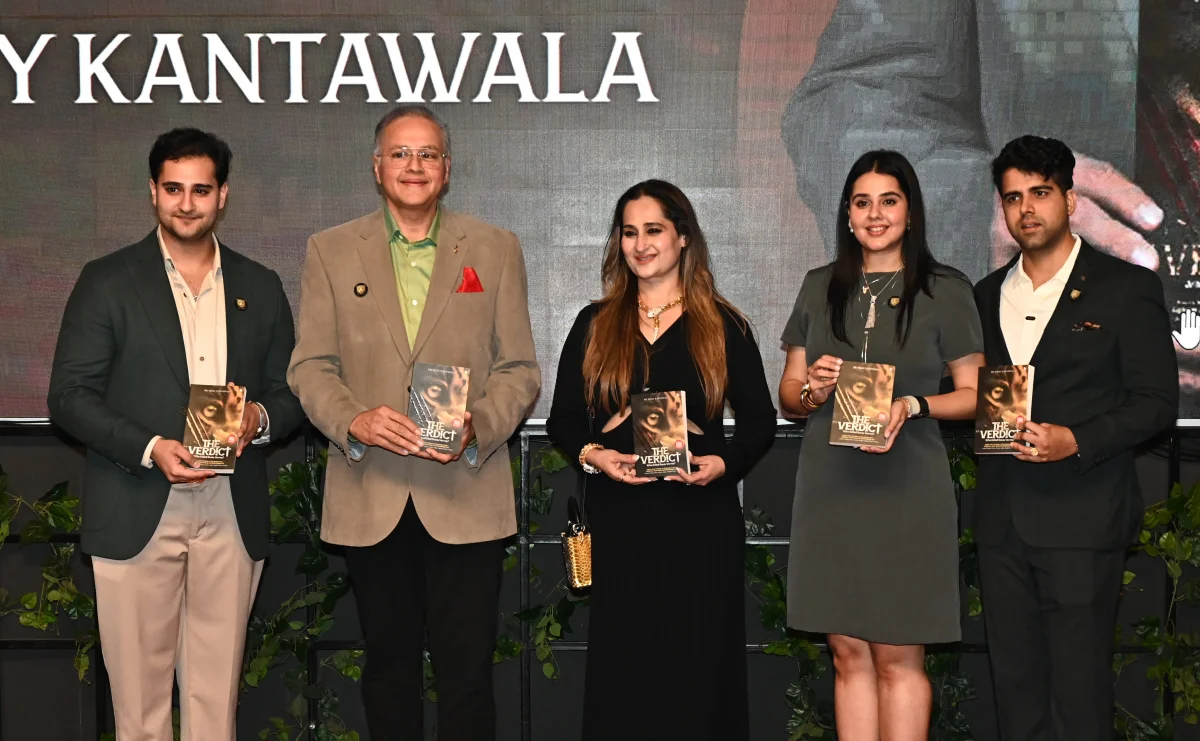
Dr. Sujay Kantawala’s life has been shaped by three enduring interests: law, people and the written word. A renowned advocate, legal commentator and author based in Mumbai, he has spent more than three decades at the Bar, beginning his legal career in 1991. Over the years, his professional journey has taken him before the Supreme Court and various High Courts across India. His public appearances have taken him into another arena altogether, with more than 1,000 live television debates on legal and socio-legal issues. Alongside this demanding professional life, he has continued to write.
For Dr. Kantawala, literature offers a different way of looking at many of the questions he encounters through law. A courtroom deals with evidence, arguments, procedure and decisions. A story can enter the spaces around those things: the motives behind a decision, the consequences that follow it, the emotions that cannot be recorded in a judgment and the choices people make when rules meet real life. His 2026 novel, The Verdict: Who Killed Sonia Verma?, is a natural extension of that perspective. The legal thriller follows retired judge Karan Negi, who becomes involved in the death of seventeen-year-old Sonia Verma in Pelling, Sikkim. The official explanation is a leopard attack, but questions surrounding the case draw Negi back towards the world of justice he had hoped to leave behind.
The novel is not Dr. Kantawala’s first engagement with the written word. His literary work extends across books and poetry, giving him a space to explore subjects that cannot always be contained within professional language. His writing allows him to move from the precise vocabulary of law to the uncertainty of human experience. That movement is perhaps one of the most interesting aspects of his career. Dr. Kantawala entered the Bar in 1991. More than thirty years of practice have given him an extensive view of the Indian legal system and the people who work within it. His appearances before the Supreme Court and various High Courts have placed him close to cases in which questions of evidence, procedure, responsibility and interpretation have real consequences for those involved. Such experience inevitably influences the way a lawyer sees the world. Behind every legal issue are people, competing interests, incomplete information and decisions that may affect lives well beyond the courtroom. Those observations find a different form in his fiction. Instead of presenting law only as a system of rules, Dr. Kantawala uses it as a setting in which people are forced to make choices. The question is not always simply what the law says. It can also be what happens when a legal decision collides with conscience, when evidence is disputed, or when an individual has to decide whether pursuing the truth is worth the personal cost.
His television career has broadened this understanding of public life. Dr. Kantawala has participated in more than 1,000 live television debates, discussing legal and socio-legal issues before a national audience. A courtroom and a television studio demand very different forms of communication. In court, arguments are presented within a formal legal framework. On television, complex questions have to be explained quickly to viewers who may be encountering the issue outside any legal context. That experience has made communication an important part of his professional identity. It has also exposed him to the way legal issues can acquire a life of their own once they enter public discussion. Facts, opinions, media narratives and public emotion can become intertwined.
This aspect of his experience has a clear place in The Verdict. The novel is concerned with what happens when a search for truth takes place in an environment where evidence, influence and public perception can pull in different directions. But the book is also concerned with something more personal: the people who have to live with the consequences of their decisions. That concern is reflected in Karan Negi, whose professional life has left its own marks. His commitment to honesty has come at a personal cost, including an estrangement from his daughter. The character carries the consequences of earlier decisions into retirement, suggesting that leaving a profession does not necessarily mean leaving its unresolved questions behind.
This personal dimension gives Dr. Kantawala’s legal fiction a different texture. Justice is not presented only as an institutional idea. It is connected to relationships, memory, responsibility and loss. Karan’s fatherhood connection with Sonia’s father adds another layer. Where one father is looking for answers after losing his daughter which Karan relates to though in a different manner. Hence, Karan chooses to help him without expecting anything in return as it is just one father helping another. For a man whose own relationship with his daughter has been marked by distance, helping Sonia’s father has an emotional resonance that goes beyond the investigation itself. These details are important because they reveal the kind of questions that interest Kantawala as a writer. The law may determine what can be established, but literature can ask what a person feels while living through the consequences. His interest in contemporary investigation also appears in The Verdict, where technology and cyber forensics form part of the search for evidence. It is an acknowledgement that the world in which law operates has changed. Digital information now forms part of many investigations, creating new possibilities as well as new questions about interpretation and reliability.
Dr. Kantawala brings this modern investigative element into a story grounded in judicial experience. The result reflects the changing relationship between law, technology and society without losing sight of the human beings at the centre of the case. His literary interests are not confined to crime or legal fiction. Poetry forms an important part of his writing life, allowing a more personal and reflective engagement with language. His body of work demonstrates an interest in both the structured world of law and the freedom of literary expression. There is also a quieter side to Dr. Kantawala’s engagement with society. At his farmhouse in Boisar, he has planted more than 1,500 trees. He also supports local primary education initiatives. These activities sit outside his professional identity but reflect an interest in contributing to areas that have a direct effect on communities and future generations.
For someone whose public life has largely been associated with courts, legal commentary and books, these activities offer another view of the same individual: one whose interests extend beyond professional achievement.
The response to The Verdict: Who Killed Sonia Verma? Has added a new chapter to his literary journey. The novel has received strong reader ratings and reviews on Amazon and is available in physical and digital formats through major platforms. More importantly, it demonstrates how Kantawala has turned years of professional observation into a fictional world where questions of law and human behaviour can meet. His journey also challenges the usual distinction between a lawyer and a writer. The two roles may appear separate, but for Dr. Kantawala they draw on many of the same instincts: listening closely, examining contradictions, understanding different perspectives and asking questions that do not always have simple answers.
The courtroom teaches a lawyer to look carefully at evidence. Public debate teaches a commentator to communicate under pressure. Literature demands something else: the patience to enter another person’s experience and allow the reader to sit with uncertainty, introspection and questions long after the book is closed. That may be where the power of storytelling lies for Dr. Sujay Kantawala. His career began with law, but it did not remain confined to law. It expanded into public discourse, poetry, fiction, environmental work and education. Each has given him another way of engaging with people and society. The Verdict brings many of those experiences into one literary work, but the book is only one part of a much longer journey.
For Dr. Sujay Kantawala, storytelling is not an escape from the questions of his professional life. It is another language in which to explore them – questions of truth, responsibility, justice, human behaviour and the consequences of the choices we make. And perhaps that is where law and literature meet: both ask us to look closely at human decisions, even when the answers are far from simple.


Comments (0)